
Tag, You’re It! A Lesson in Communicating!
A Bone-Jarring Experience and the Importance of REALLY Communicating!
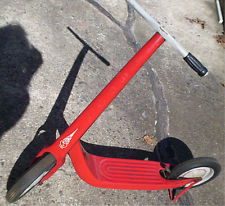
Yesterday we took our six-year-old granddaughter out to a nearby parking lot to let her show us how she has mastered her new Razor Scooter. Her description of the scooter, “It goes eight miles an hour, Granny!” My description – a high tech, electric motor version of the old Red Radio Flyer scooter. She has mastered it quite well and made several trips up and down the plains and hills of the parking lot. In the course of our conversation prior to the riding excursion, she explained that she had learned to “just jump off of it.” This was later clarified as a last resort maneuver that she and her mother had agreed upon in the event she felt “it was out of control and destined for a crash.” Considering eight miles an hour is the top speed, “jumping off of it” does seem the safer option to a full on crash.
At a critical point in our outing yesterday, she exclaimed, “Let’s play Tag You’re It, Granny!” My reply, “Sure,” as I take off at a leisurely trot. Shortly, I hear the scooter approaching, and I make a slight veer to the right so as to allow her plenty of room to go between curb and me. In my mind “Tag, You’re It” on a scooter means she will come up even with me and exclaim, “You’re It, Granny!” Not so in the language and understanding of a six year old!
It seemed to occur nanoseconds after my slight veer. I was going down and landed sprawled, face down on the parking lot pavement. Ouch! Really big! I lay there motionless. My wrap around sunglasses were off and on the ground. Luckily, my real glasses remained on my head and in tact! Was anything broken? Could I move? The most obvious sources of pain in the immediate aftermath were the palms of my hands and the sense that every bone in my body had received a resounding “Thud!” No, I was not wearing the protective helmet, knee and elbow pads that she was wearing. Both she and her grandmother, who was also with us on the outing, came to my rescue. She had taken a bit of a tumble off the scooter, but was totally focused on me sprawled on the pavement and obviously hurt. That’s not a sight six-year-olds are accustomed to seeing.
I simply lay there for a few moments assessing my condition and not wanting to move. I gradually moved and turned over to my back and lay there a bit more getting my bearings before getting up. I proclaimed my, “I’m okay,” (actually, I wasn’t – pain and waves of nausea) loaded the scooter back in the car, and headed home to clean up and tend my wounds – gouges (from the pavement gravel) in both palms, bloody, scraped elbows (even though I had on a long sleeve shirt that was not torn!), and later a bulge and pain in my right thigh muscle that has responded fairly well to ice – lots of it!
After wound treatment and while resting on the sofa, I had an interesting and enlightening conversation with the scooter rider. Who, by the way, was quite compassionate and solicitous in attending to my care. At one point, she pulled a random book off the shelf and said, “Here, Granny, you can read this.” After assuring her that I was okay, I asked her what had happened. Her response was that she was trying to get close enough to touch me and say, “Tag, you’re It!” We, then, had the discussion about how to play “Tag, you’re It,” when one is on a scooter and the other is not. We decided the best method would be for the scooter rider to come along side the runner, make eye contact (at which point we “eyeballed” each other with big bulging eyes), and say, “Tag, you’re It!” It never occurred to me to have that conversation before we played!
And that brings me to the point of communication. How often do we think we are communicating, when actually we are not? Communication definitely involves attending and listening, but it also requires that those communicating share common meanings and concepts for the words and ideas used and similar understandings for what is reasonable and logical in the given situation. My granddaughter and I were not communicating effectively prior to the “Tag, you’re It,” game. Or, to be more accurate, I, as the adult, was not communicating to a six-year-old what was reasonable and logical in our “Tag, you’re It” game between scooter rider and runner. She was operating, as to be expected, fully out of her experience and understanding as a six-year-old. Me, the adult, well! Sometimes it takes a bone-jarring experience to make us think and communicate effectively!
Beholding. . . in the Mirror
 Note: As I have mentioned earlier, 1997 was a HUGE year for this seeker on the pilgrimage. I wrote this piece during that time as my journey made dramatic shifts from a focus on “doing” — Bible Study, church, the “right thing” — toward simply “being” focusing on quiet, contemplative prayer, and “practicing the presence” as Brother Lawrence said. The basis for my whole identity shifted from me — who I was, what I did, and how well I did it — to Christ. Not the church, not the Christian faith tradition, but Christ — who he was and is and living in union and communion with him. As my focus has shifted through the years, I have come to believe that the most important thing for me in my faith journey is becoming christian. Notice that is with a small “c” meaning Christ – like, and not necessarily the “C” of the Christian faith tradition.
Beholding . . . In the Mirror. . .With Open Face
But we all, with open face beholding as in a glass the glory of the Lord, are changed in the same image from glory to glory, even as by the Spirit of the Lord. II Corinthians 3:18 (King James Version)
As I study and meditate upon II Corinthians 3:18, I become more convinced that within it we are given the “recipe” for the christian — “Christ” — life. I use the word “recipe” somewhat with tongue in cheek for I know we as a society, as a nation, and as a people clamor for neat packages. We want to manage in one minute, improve our golf swing in five easy lessons, and become effective people in seven steps. I admit unashamedly that I have had my days of adherance to seemingly reasonable, simple step-by-step methods for efficacy and management of all areas of life.
However, over the past several years, and particularly the last two, I have increasingly experinenced that the “recipes”, for the most part, just don’t work in the vast complexities and mysteries of the processes of life. However, if we consider this a “recipe” verse for the “Christ” life, what are the basic ingredients and procedure? First, there is the individual, you and I. Second ingredient is the Christ, Jesus — the Lord — and finally the Spirit of the Lord. Rather simple thus far — me, Jesus, and the Holy Spirit. Now, what do I do with the basic ingredients!
I sit myself before Christ, the Lord , and I look at Him. Now, friends, this is not just a simple behold — lo, look, see. This is beholding! This is the Greek word katoptrizomai, a comparative of the word kata which frequently denotes intensity, and a derivative of the word optomai which means “to gaze with wide-open eyes, as at something remarkable”. So, here is the picture: I am sitting before the Christ intensely gazing with wide-open eyes at the remarkable Lord. I suppose the remarkableness would most definitely be His glory. What do you think?
Now that we are beholding the glory of Christ, the Lord , what happens? It is as if the Lord becomes a mirror, “as in a glass”. As I sit before the Lord, my mirror, the reflection, or the image I see of myself, is my true self created in His image. Even as I continue to still and humble myself before my “mirror”, my Lord, I am changed into “the same image”, His image — the image in which I was truly created. How in this world can just looking in a mirror change my image? I must admit that looking in the mirror most mornings does change my image, but not without a great deal of effort on my part and the application and use of numerous substances and devices. Blow dryer, curling iron, and several cosmetic products just to mention a few.
However, when it comes to being changed before the mirror of the Lord, the only things needed are that we come; that we come with “open face”; and that we be willing to surrender and submit to “the Spirit of the Lord.” In order to understand how we come with “open faces” or “unveiled faces” as used in the New International Version, it might be helpful to look at II Corinthians 3: 12-17. In these verses we are told that we have a hope, and with that hope we can be very bold before the Lord. We do not have to put a veil over our face as Moses did to keep the people from seeing that his face was losing the radiance which was received while in the Lord’s presence. You can check this out in Exodus 34: 33-35. Under the old covenant during Mose’s time he was the only one, as God’s appointed leader, who could be bold and come before the Lord. Now, however, we can be bold and come before the Lord with open face, receive his radiance, his glory, and then walk among men without a veil to hide the fact that the radiance is diminishing . In fact, we can reflect the radiance of the Lord to others. In essense we can become mirrors ourselves. We are to become mirrors as the Christ within is reflected to others.
Brothers and sisters! Perhaps I just got a glimpse of heaven Have you ever seen the bright reflection of a mirror in the sun.? So bright you can’t even look at it. Think of it. Revelation 1:16 tells us “His (the Lord’s) face was like the sun shining in all its brillance.” With the Son shining on the multitude of those who have been transformed into his image — those who have become mirrors, a “sea of glass” before the throne (Rev.4:6) — I can’t imagine the magnitude of the brightness. Nor can I fanthom my light sensitive eyes tolerating the experience. Just another reason for the necessity and the promise of our lowly bodies being transformed to be like His. Isn’t God good! He gives us a sight to behold and then he enables us to behold it. Speaking of beholding, let’s get back to the original idea of open (unveiled) faces. (Please do pardon my slight distraction while sharing in my excitement.)
We are not as Moses. We are not limited in who can come before the Lord, nor do we have to cover our faces afterward. Why? Look again at II Corinthians 3: 12. “Therefore, since we have such a hope, we are very bold.” What is the hope that we have? Jesus Christ — the Christ within, “the hope of glory.”(Col. 1; 27). So here’s the scoop! Through and because of the Christ within we can come boldly before the Lord, the mirror, and sit and behold the glorious image which transforms us into that same glorious image, the image we were created to reflect.
Now exactly how does this occur and how long does it take? Beats Me! Probably a lifetime, but I don’t know the answer for myself or anyone else. Returning to the recipe analogy, I am not the cook! (Thank God! Cooking has never been one of my strong suits.) Who is? “…even as by the Spirit of the Lord.” So even with the recipe the transformation into the “Christ” life for each of us is still a mystery. Given the mystery are we willing to be faithful in coming before the Lord? Are we willing to abandon ourselves and surrender the transformation of our lives to the mystery of the Spirit of the Lord? Are we willing to trust God, the Lord Jesus Christ, and behold Him with open face as in a glass and remain content to just “be” in His image. I find these to be questions I must ask and answer daily, sometimes several times a day!
A Christian Coming Out — Review
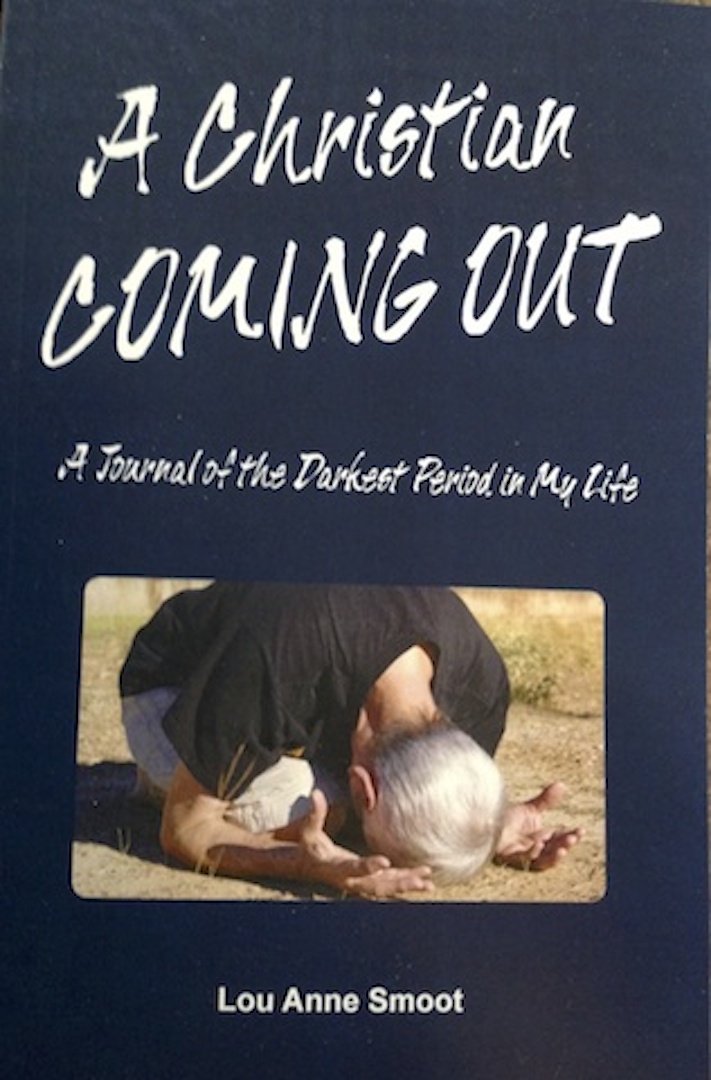
Smoot’s memoir is a very telling narrative of her experience coming out as a gay Christian while being committed to remaining in her home church in conservative East Texas. It is a compelling story of agony and heartache, joy and hope. She courageously offers a brutally honest glimpse into the depth of soul agony and heart struggle that a lifelong Christian experiences when wrestling with the reality of her sexual orientation. Ms. Smoot’s offering is a must read in today’s “culture wars.”
PS Heretic
We Shall Behold Him. . .
Note: In the Fall of 1997 I began a semester of Clinical Pastoral Education (CPE) training. The training involved classes and actual hospital chaplaincy work which I did for a couple of months before medical issues (detached retinas) forced me to have to drop out. During those two months I learned a lot about myself, felt God’s work within me, and gained a new perspective on God’s calling to live and be in the spirit of Christ in this world. I wrote the following relating an experience I had while doing the chaplaincy work — an experience I will never, ever forget.

WE SHALL BEHOLD HIM. . .
There was a faint “Come in” in response to my light knock on the door. As I entered the room I could see him lying in the bed. He peered through the bed railings as I moved toward him. At his bedside I noticed the stark contrast between his very black skin and the white, though not crisp, sheets. His lunch, barely touched, still sat on the tray table. I softly commented that he certainly didn’t eat much. He somewhat laughed and said, “I couldn’t eat that if I was well.” His laughing revealed the truth, only three misdirected teeth. I chuckled with him as I replied, “No you couldn’t.” We exchanged smiles as we were now both aware of the truth. His not eating had nothing to do with the food. I felt a warm affinity for this little black man with only three teeth.
As I visited with him, I began to notice his condition. His eyes were dark but not clear, with the white being more yellow than white. His almost hairless head sat squarely on fleshless shoulders. What hair he did have was wiry with a hint of gray. It stuck straight up and out from his head as if in defiance of any comb that came near. His gown was all awry uncovering the distinct outline of bone covered over only with tight black skin. The rest of his body was decently covered with the sheet; however the buldge was clear evidence of a swollen stomach. Later as I thought about it, I realized that his body was probably finally giving way to the ravages of the years and a “hard life.” We chatted a bit about how he was feeling — “Better than yesterday!” — where he lived, and his family. We were interrupted by the attendant picking up the lunch tray. She too commented on his not eating. He responded as he did with me; however, she did not understand. He and I chuckled and exchanged smiles again. I told her that he couldn’t chew the food. This seemed to focus her attention toward him as she uttered or perhaps gasped an understanding, “Oh!” She offered some menu options for dinner. He settled on chicken noodle soup, crackers, and jello. All of which he could probably manage very well with his three teeth. She left with tray in tow, and we returned to our visit which was nearing a natural end.
I asked if we could pray together before I left. He said that would be good. I then asked, as I often do, if there was anything specific that he’d like to pray for or about. His answer, “That I might just get better because I know I won’t get well.” At first I was startled by the acknowledgement of the reality concerning his condition. Here was a man who had the ability and the courage to express the truth of his life as he knew it. And to say it in a way that gets attention. He surely had mine.
With this last revelation he settled into deeper levels of honesty and personal pain. He was concerned about where he would go after leaving the hospital and even more distressed about being a “burden” to his children. I heard his feelings and was able to empathize a bit. Not that I, or anyone else would ever experience his reality in his way. Yet we all from our own varied experiences can recall feelings of anxiety, concern, and loss. How many times have I heard dear ones caught in the grips of illness, or simply and naturally aging, project their own sense of helplessness as a “burden” to their loved ones? The only words I could say to this one were, “I hear you”. Tears were brimming his eyes, and I felt their sting in my own.
“Where is your hope now?” He took his hand from under the cover and simultaneously tapped his chest and pointed upward. I asked if he knew Jesus. “Oh, yes!” was the response. I took his now uncovered hand in mine and prayed. I do not recall anything I said, but I will never forget feeling his hand in mine and the peace that was within and between us. He thanked me for the prayer. I thanked him. I left the room in awe of Roosevelt.
I made my way down the elevator, to the office to get my things, and out the door to the car. I was running a bit late for my next appointment. I had not intended to stay as long as I did with Roosevelt. I had the car radio tuned to the local Christian station as I drove back to town. I was more in tune to my thoughts than my driving or the radio. A review of the morning visits brought serenity and thankfulness for the whole process. I was remembering a recent conversation with a friend about meeting Jesus in the face of strangers when the song on the radio penetrated my thoughts. “We shall behold Him, We shall behold Him; Face to face in all of His glory. We shall behold Him.. . .” Emotions overwhelmed me. Tears flooded my eyes, wonder filled my heart. I wept as the truth sprang up and flooded my soul. I had beheld Him, today, face to face in the glorious face of a little black man with three very misdirected teeth and defiant hair. I beheld him today in Roosevelt. And just think, I almost missed it!
Yes, I almost missed it. I had been on the hospital floor for three hours. I knew if I made one more visit it would intrude into any lunch and “rest” before my afternoon appointment. I also knew, or thought I knew, that Roosevelt was a black man. This knowledge was born of nothing other than my experiences. All the Roosevelt’s I had ever known were black men or boys. This knowledge contributed to some anxiety about visiting him. In my short time as a volunteer chaplain, I had realized that I was more comfortable visiting with women than with men and the least comfortable with black men. I do not believe my uncomfortableness was based on anything other than my lack of experience. So I was stretching, growing, expanding my comfort zone, and that is usually uncomfortable at first.
The debate in my mind over making this particular visit was like a see-saw gone berserk. I won’t make the visit. It’s getting late, and I am tired. I’ll pop in for just a minute. It’s lunch time. He’ll be eating. I will excuse myself to allow him to eat. But I really don’t have time. I was at his door twice and did not knock. I completely left the floor once and came back. What made me finally knock and enter, I do not know. No doubt the Holy Spirit wrestling with my own self-centered, controlling spirit. I have learned over the years that when this struggle is so intense there is apparently something I need to do, learn, or experience from that which my spirit seeks to avoid. I suppose this was never truer than it was today.
How often before have I missed it? Probably more than I care to think or imagine. Yes, I believe we do miss resplendent opportunities to behold God in all of his glory in the faces of those around us. We become self-absorbed in our own agendas, busy with our never ending activities. We become self-consumed, and miss the opportunity to feed and be fed by the Roosevelts encountered daily in our lives. My prayer has become, “Jesus, slow me down. Jesus, open my eyes. Jesus, direct my sights out and around. Jesus, let me really see others. May I see you, Jesus, as I behold others. May your Spirit transform me with each sighting.”
“And we shall behold him, we shall behold him. Face to face in all of his glory.” I beheld Jesus, the Christ, today in the face of a very sick, truthful, and courageous little black man with three misdirected teeth and defiant hair. I was not only blessed but changed, never to be quite the same as before. I pray, Jesus, that he may have seen something of You in me.
A Pilgrimage
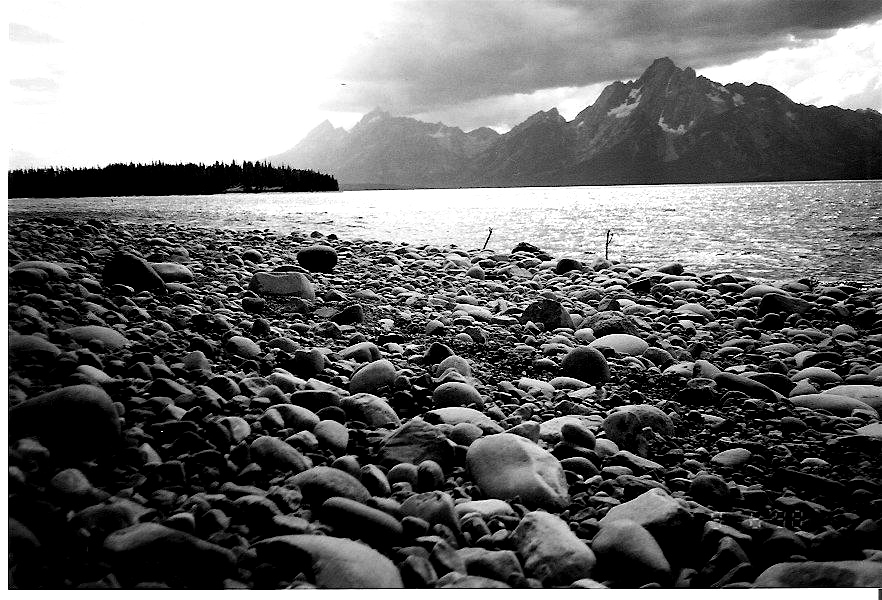
Author’s Note: The year 1997 was huge in my journey. It was a year of multiple reversals — personal, professional, financial, and health. Excruciating to say the least! Even in that, it was a year of tremendous personal and spiritual growth. In the summer of 1998, seeking respite, recovery, and renewal, I literally “took off” and lived and worked in Grand Teton National Park for four and a half months. Even though I had lost approximately 50% of my sight, I gained a new vision and perspective on life and who I was in this life. I wrote this poem sitting on the “rocky” beach at Jackson Lake shortly before I made the return trip home.
The Walk
Jackson Lake Beach
Grand Tetons
I walked along the rocky beach
And sat upon the hard cold rocks.
The graceful gull adorned the sky.
The stately fir stood up as high.
I looked across the waters still
And heard the waves come at my feet.
The mountains soared; the waters roared.
The sun shone warm upon my back.
Alpine winds sang a constant song.
My heart was filled; my soul felt peace
As I walked along that rocky beach.
I climbed the heights of mountain trails.
Through rocks and roots I did prevail.
And, Oh, the bear! At first he ran,
But then he turned and took a stand.
I snapped a shot. My heart did pound!
Keep mov’in along that mountain trail.
Yes, the mountains soared; the waters did roar.
The sun shone warm upon my back.
Alpine winds sang a constant song.
My heart was filled; my soul knew peace
As I climbed the heights of mountain trails.
The work was steady; some days hard.
The folks were grand, as most folks are.
Life in the dorm was tough at first,
But I settled in and made some friends.
Didn’t sleep much; learned to live without a tub!
The mountains soared; the waters roared.
The sun shone warm upon my back.
Alpine winds sang their constant song.
My heart was filled; my soul found peace
As I lived these days at Colter Bay.
Now I could tell so many a tale
Of man and sights along the way
Of life and work at Colter Bay.
Fear and laughter, joy and sorrow
As new life and death came our way.
And through it all the story remains.
Yes, the mountains soared; the waters roared.
The sun shone warm upon my back.
Alpine winds sang their constant song.
My heart filled; my soul at peace
As I lived and walked beneath the peaks.
Those Grand Tetons — God’s gift to me.
Jackson Lake, Wyoming
Summer 1998
Pilgrimage Companions
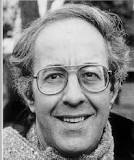
I have recently been revisiting some of my earlier writings and came across this one that I wrote in the Spring of 1997 regarding Henri Nouwen. That year was a period of change and deepening spiritual awareness for me, and Nouwen’s life and work had, and continues to have, tremendous influence in my life and journey. Here is what I wrote then and what I still believe now.
A Reflection on Henri Nouwen
I have not picked up a spiritual magazine or journal over the last two or three months — and I have picked up several — without finding some words eulogizing the late Henri Nouwen. He died of a heart attack in September, 1996. What was there about this mere man that so many from such varied sources would offer such consistant tribute? Philip Yancy in Christianity Today refers to Nouwen, “A better symbol of the Incarnation, I can hardly imagine.” Gary Collins, president of the near 18,000 member American Christian Counseling Association, touts Henri as his favorite Christian counselor and writer.
Nouwen was born and raised in Europe and was trained in psychology and theology in Holland. He came to the United States as a ship’s chaplain when in his 20’s. At Harvard, Yale, and Notre Dame he was an admired and popular professor. He averaged a book a year –some 30 in all. His reputation as a conference speaker was evidenced in his extensive travel schedule. He walked among spiritual giants not the least of these being the seriously disabled residents of L’Arche Daybreak, Richmond, Ontario, where he lived the final decade of this life. While at L’Arche Daybreak, a community home for the seriously disabled, Henri served as priest for the community and personally cared for Adam, a profoundly retarded young man. Carolyn Whitney-Brown, artist and spiritual director at Daybreak, reminds us that Henri chose to live where his reputation meant nothing. Many, if not most, of the community could not read. At Daybreak Henri found a place where the longing of his restless soul was satisfied — a home where people would be less interested in his credentials than in who he was. He continued writing and traveling to speak from time to time. However, when travelling a member of the community usually went along to speak with him, and he always returned home to the haven of Daybreak.
Nouwen’s books were written from the heart with great candor. He revealed personal struggles and shortcomings that most of us would dare not admit, not to mention publish. In The Genesee Diary he wrote, “While teaching, lecturing, and writing about the importance of solitude, inner freedom, and peace of mind, I kept stumbling over my own compulsions and illusions.” In his transparency he touched the core feelings and concerns of his readers’ hearts. His works returned again and again to the theme of the “beloved”. His message to us in Life of the Beloved is that “becoming the Beloved means letting the truth of our Belovedness become enfleshed in everything we think, say or do. It entails a long and painful process of appropriation or, better, incarnation.” Henri gives us some glimpse of what that “painful process of . . . incarnation” might entail in Can You Drink the Cup. He encourages us not to be afraid of the raw realities of our lives:
When each of us can hold firm to our own cup, with its many sorrows and joys, claiming it as our unique life, then we too can lift it up for others to see and encourage them to lift up their lives as well. The wounds of our individual lives, which seem intolerable when lived alone, become sources of healing when we live them as part of a fellowship of mutual care.
Nouwen revealed in absolute truth who he was, and who he was not, in simple trust and faith that in the revelation others might come to know their belovedness. “A better symbol of the incarnation, I can hardly imagine.”
I personally was introduced to Henri Nouwen and his works in 1990 through a gift of his book, The Wounded Healer. Each reading of it, as well as his other works, touches the depths of my heart and renews afresh the truth of my belovedness, the reality of my struggles and brokenness, and the promise of rest for my longing soul in the bosom of my loving God. I do not wonder that so many would offer such tribute to the life and work of such a mere man as Henri Nouwen.
When the imitation of Christ does not mean to live a life like Christ, but to live your life as authentically as Christ lived his, then there are many ways and forms in which a man can be a Christian.. The minister is the one who can make this search for authenticity possible, not by standing on the side as a neutral screen or an impartial observer, but as an articulate witness of Christ, who puts his own search at the disposal of others.
from The Wounded Healer by Henri J. M. (Just Me) Nouwen
Henri Nouwen
1932 — 1996

Note from PSHeretic: At first I thought this writing probably had nothing to do with a spiritual journey — a.k.a. pilgrim, seeker, heretic. However, as I pondered on it I thought “Yep! It is surely a part of my journey.” Our pilgrimage is immersed in family, and I don’t know that there is anything more sacred than death (more about why I say that -later) and remembering, honoring, and carry the spirit of our loved ones with us as the journey continues. So, here it is!
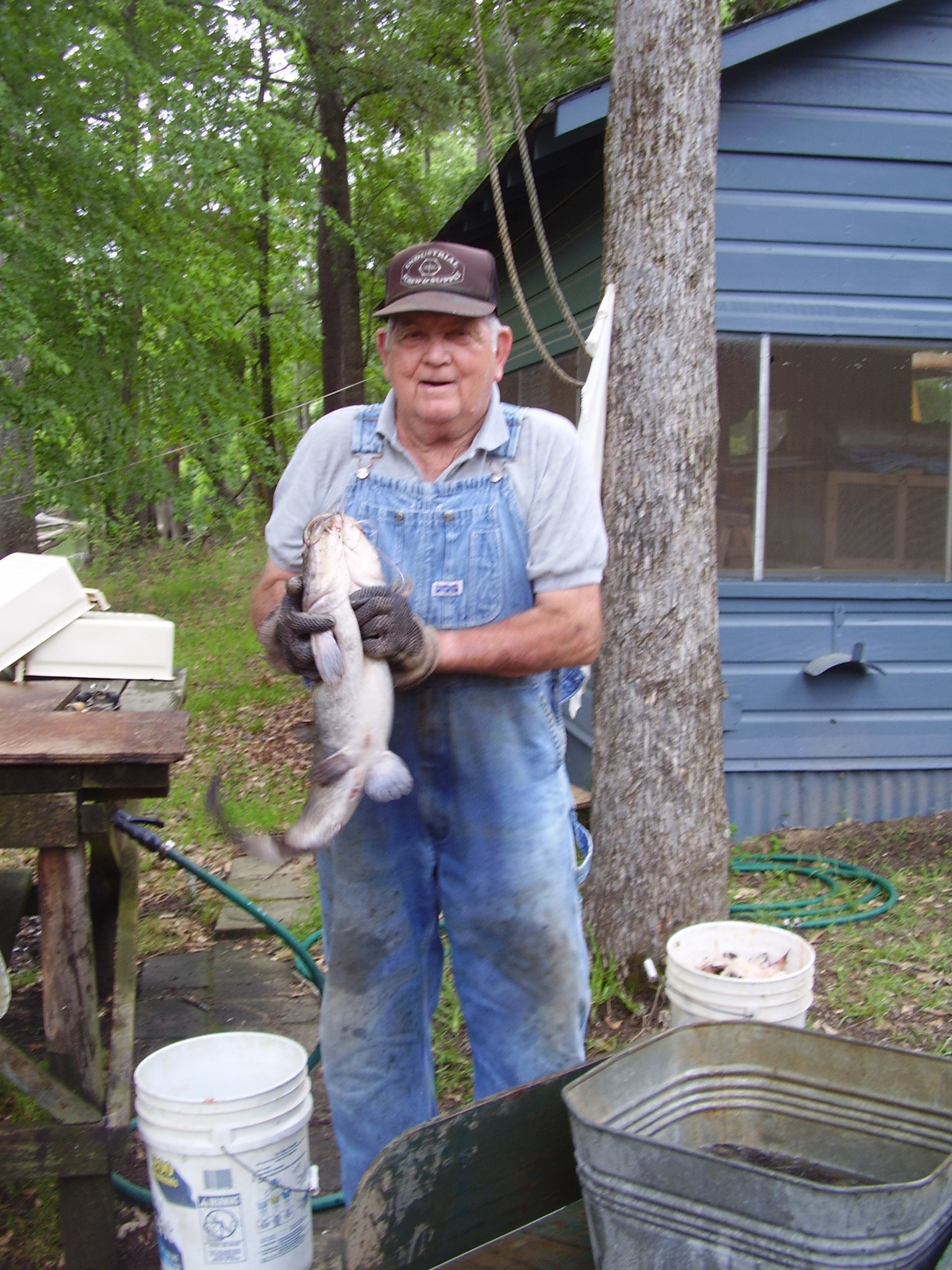
Clyde E. Still
12/20/31 — 10/28/2012
My Dad’s Legacy
Big Cypress Bayou Paddle
October 21, 2013
I have wanted to do this paddle for probably the past two years — at least since I got the kayak. Dad is on my mind and in my heart as the bayou was certainly his sacred space, his Holy Ground, and I am one week away from the first anniversary of his death. He loved this land and these waters – the wetlands of Cypress Bayou. He knew the bayous –Black, Little and Big Cypress — like the back of his hand. Many times he has taken me up and down the channels and into their inner recesses. He could find the remotest areas for his trotlines. The last time we were out on the bayou before his death we were in Black Cypress. The water level was up, and we were out of the channel in a maze of Cypress trees. Some of them were so close that the boat occasionally got hung up as we weaved our way through. I had no idea how to get out of the swamps and back to the main channel, but he always knew where he was, where he was going, and how to get there. I always felt safe with my dad in the boat. I surely do miss him! I had told Dad numerous times that I wanted to do this paddle. His response was always, “Just don’t tell me when you do it. Just show up.” Dad was a worrier. I can understand Dad’s worry, as often, when I know what my sons are doing – car trip, airplane journey – I will worry a bit. Well, Dad, don’t worry today. I know you are watching.
Moving down the bayou I see evidence of times come and gone. The initial channel going east from Jefferson is wider than the channel back toward the west, a testament to more boat traffic today as well as in the past. The remains of a Civil War ordnance magazine are on the right about a third of a mile down the bayou. The channel becomes even wider at what is still known as the “turning basin.” This is where mid-nineteenth century stern-wheelers that made their way up the Mississippi into the Red River, through Caddo Lake, and up Big Cypress Bayou loaded and unloaded cargo and turned to head back to the Mississippi. The broad channel is a reminder of the days when Jefferson was a bustling port and known as the “Gateway to Texas.” Today, the bayou is quiet.
Quiet and flat best describe the water, as it is not moving at all. This is definitely a paddle trip, not a float trip in a steadily moving current. The Texas drought continues to take its toll on our waterways, and the Big Cypress is no exception. The water level is as low as I have seen it since 1986 – 26 years ago – when Dad and Mom made their home on the bayou. The Bald Cypress tree roots are sprawling and gaping where once they were covered and nourished by the waters. I see the collateral damage of the drought as well – lots of dead wood as trees have fallen. At one point a very large tree has fallen into and across the bayou making it difficult to maneuver. Not only is the bayou affected by the drought, but it is also impacted by both our conservation efforts and ultimately water usage.
In 1959 the Army Corps of Engineers completed the Ferrell’s Bridge Dam on Big Cypress Bayou. The dam is located eight and a half miles west of Jefferson, Texas. The dam, a project of the Flood Control Act of 1946, created Ferrell’s Creek Reservoir (now known as Lake O’the Pines). Additional purposes of wildlife conservation, recreation, and water supply were added during construction. The lake provides water supply storage for the Northeast Texas Municipal Water District serving six towns in the surrounding area and the city of Longview. The drought and the municipal water usage results in very little water, if any, being released from the lake. Approximately 14 miles east of Jefferson on Big Cypress is Caddo Lake State Park and the entrance to Caddo Lake, the largest natural lake in the South. Since the beginning of the current drought, anytime Dad saw the current running in the bayou, he assumed that “someone is pumping water out of Caddo.” I have no way of substantiating that, but Dad believed it, and it seems to be a likely assumption. As more water is held and used for municipal and industrial consumption, what will be its impact on Dad’s beloved Cypress Bayou?
As I continue to paddle one thing I do not see is people, not a living soul of the human kind. I have seen a small whitetail deer jump and scurry into the woods. Apparently it was lying on the ground and my passing disturbed it. A kayak is quiet, but not always quiet enough! There have been turtles on logs, most I could see, but some I only heard as they “plopped” into the water at my approach. When the kayak is still – for a drink or simply to take in my surroundings – I hear the mosquitos buzzing my head. Even with the drought, they are alive and well! I know the forest is home to a plethora of wildlife species – fox and gray squirrels, armadillos, cottontails, bobcats, cardinals, barred owl, snakes – for I have seen them, but not today. Heck, I have even eaten them. When I was a kid, venison steaks and squirrel stew were frequent fare. One time Dad prepared soft-shell turtle and armadillo just because he wanted us to try it. I didn’t like it!
Today my constant and only companion is the Great Blue Heron that stays slightly ahead of me. How many times my dad and I have watched this large bird picking his way along the shore, stalking and then suddenly grabbing his prey. He will walk in the shallow water along the shore for a bit and then he might go up the bank and seemingly walk around a large stump or protrusion in the water before returning to the shallows. In all my experience and as quiet as I can be, I have never been able to pass the bird on the shore. He will always fly across the water before me. Such is the case today as the bird has stayed just ahead of me on the water – my spirit guide for the day. Perhaps the presence of Dad!
I move through the water with a slow, steady paddle, but paddle I must in order to move. The water is clear and greener in color as opposed to the muddy reddish color it often acquires after a rain and the subsequent run off. My dad fished these waters for over sixty-five years. Again, he put food on the table – channel and flathead or Opelousas catfish (my favorite), bass, crappie, and the occasional buffalo or carp. These last two were my least favorite!
Most of the shoreline is higher banks with carved out bluffs being ample evidence of higher water levels in the past. The land supports a mixed pine and hardwood forest. Bald cypress, water tupelo, and river birch are predominant along the waterline with a variety of oak, sweetgum, and elm in the recesses. Occasionally I see an area that has been cleared. Logging and the timber industry pose another threat to the hardwood bottomlands in the Cypress Bayou. Dad hated it when loggers would come in and, as he called it, “rape the land” leaving a mangled area of dirt ruts and damaged smaller trees and vegetation. Although approached many times, he never allowed the timber on his property to be cut. I am particularly awed by the Bald Cypress. From their broad base they tower like cathedral spires surrounded by rows and clumps of shrouded pilgrims and worshipers – the abundant cypress knees — come to pay homage to their inspired beauty. I remember Dad often saying that he went to church on the bayou as he rarely attended a church service. I now know what he meant.
Along the banks I see the occasional river camp house or modern home complete with floating walks and docks. It is obvious that some of the dilapidated river houses with rusted and rotting docks have long been abandoned. A rusted out school bus that I would imagine was outfitted as a fishing or hunting camp house rests precariously on the bank. As I approach the area where Black Cypress flows into Big Cypress, approximately five and a half miles east of Jefferson, there is a distinct change in the water. It is now reddish and muddy, no doubt from the rains and run off further up the Black Cypress. The junction of Black and Big Cypress, known as Thompson’s Camp, is a popular launching area for boating and fishing. Also, there are some fish jumping in the area. From the sound of the “splash,” I would say rather large fish. But you never know, by the time you hear the splash the fish is back in the water.
The final mile to Dad’s house is a broad channel with lots of new development on the left bank. When Mom and Dad purchased their property here in 1986 there was only one other house on this stretch of the bayou. Now there are fourteen! The right bank, according to Dad, is part of a hunting club and is not developed. Dad’s house is at the very end of the road. As I said earlier, he could find the remotest places! It is 4:07 p.m. as I maneuver up to Dad’s dock. I have been in the water slightly over four hours. I launched at Jefferson around noon and have paddled 7.17 miles per the GPS. (Of course, I forgot to set the GPS trip feature until I had paddled an estimated quarter of a mile!) It has been a great paddle! The temperature, whatever it is, has been ideal with the sky overcast but no sprinkles. The company – my memories of Dad and the presence of the bayou that he loved – the best! I started to abort the whole trip when it began to sprinkle slightly at the launch. I am so glad I didn’t. Thanks, Dad, for the journey! And, for the legacy of your love for family, this land, and these waters – all sacred spaces, all Holy Ground!
Heretic??
“If the YOU of five years ago doesn’t consider the YOU of today a heretic, YOU are not growing spiritually.” — Thomas Merton
Of late I have been doing a good bit of musing regarding my spiritual journey, how it has taken twists and turns throughout life, and how currently I am in a place spiritually that is quite far removed from where I started. I grew up with, nurtured, and adhered to my Southern Baptist beliefs through adolescence and young adulthood. However, when I hit my mid-forties, a shift began in my journey, and the road became much broader than the dogma and doctrine of Southern Baptist beliefs. Oh,my! This was not your “Midlife Crisis” for that had occurred several years earlier with divorce, new career direction, a physical move — the whole ball of wax!
A few weeks ago as I lay awake — I sometimes call these my Midnight Musings — I could not let go of the words pilgrim, seeker, heretic. My musings for some time have been flirting with the idea that some, if not many, of my current spiritual beliefs might possibly be considered heretical if viewed from Southern Baptist standards. Am I a HERETIC? God only knows! I know that I am, and will always be a PILGRIM on this spiritual path. I am a SEEKER — seeking God, seeking truth, seeking grace, seeking compassion and love for all, seeking unity, seeking peace. I would want to say seeking to know God, yet, how can we know “The Cloud of Unknowing” as written by the fourteenth century mystic. Then I muse “Are we all not heretics in our claims to know God, to understand the heart of God, to proclaim the Word of God. I wonder about that. Thus, I am and remain a pilgrim, seeker, heretic.
Along with these musings came the “inner urgings” to write. Now I have done a good bit of writing and journaling in my time. I suppose that would be inevitable given my background as an English and literature teacher — first career. However, the urgings were/are to write about the spiritual journey. Almost, at the same time as I was having these musings and urgings I ran across this quote by Thomas Merton:
“If the YOU of five years ago doesn’t consider the YOU of today a heretic, YOU are not growing spiritually.” (Paraphrased — if anyone out there can help me with the source text for this I would be most appreciative. I am thinking Seven Story Mountain, but not quite ready to reread the whole book.)
Wow! Must be a God thing! I like to view the quote as an affirmation of my pilgrim, seeker, heretic musing! Plus, Thomas Merton is one of my favorite spiritual writers.
So, here I go! This blog will be a collection of writings both current and historical, both prose and poetry. Some entries will be biographical. Some will be just a thought. Some will certainly be the midnight musings. Some may be old journal entries. Let’s enjoy the journey!
PS Heretic

Thomas Merton, O.C.S.O. was an Anglo-American Catholic writer and mystic. A Trappist monk of the Abbey of Gethsemani, Kentucky, he was a poet, social activist, and student of comparative religion.
 Pilgrim Seeker Heretic