Category Archives: Ethics

We don’t matter so much, but the children do.
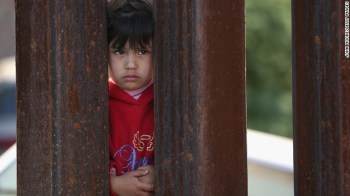
Teach the children. We don’t matter so much, but the children do.
— Mary Oliver
This was my morning read. My heart aches as the truth of Oliver’s words is juxtaposed with the recent actions of our Texas Senate. In passing SB 1018 our elected senators are in so many ways saying that children do not matter. SB 1018 will allow the warehousing of immigrant families and children in family detention centers licensed as child care facilities. Not only would these centers be licensed, but they also would be allowed to waive certain minimum standards established for day care centers. Why would we allow ANY facility to “care” for children in a place or manner that does not meet a minimum standard of care? Our Senators seem to be sending the definite message, “You do not matter, and we don’t care!”
Another aspect that makes SB 1018 even more abhorrent, if that is possible, is the fact that the bill was written by the GEO Group, a for-profit corporation that operates these types of detention centers often referred to as “baby jails.” https://www.texasobserver.org/texas-senate-votes-license-baby-jails-child-care-facilities/
The bottom line is that our elected Texas senators have approved the for-profit incarceration of families and children in “licensed” facilities that do not have to meet minimum standards of care. We do have better options available to us! What are we teaching our children, all our children? Surely not that their lives matter! I am appalled and ashamed of our senators’ actions. Our own District 1 Senator Bryan Hughes authored this unconscionable bill. As I said, my heart aches for us all, especially our children.

Leaving the Church
 Note: In the spring of 2015 I made one of the most difficult decisions of my spiritual pilgrimage. I left the church congregation that I had been a part of for almost fifteen years. Below is the letter I read aloud to my Sunday School group and sent to my pastor and church staff informing them that I was leaving and why I was leaving as well as why it was important to me that they know why I would no longer be attending. Unfortunately, I have not been able to find a truly inclusive, welcoming and affirming congregation in my area, and admittedly, I often miss the corporate worship and fellowship. My current worship usually occurs on the hiking trail, in the kayak, or while sitting in my back porch swing listening to the birds and watching the squirrels play. I find fellowship on those occasions I am blessed to sit with friends and share our lives and stories.
April 26, 2015
Dear
It is with both sadness and hopefulness that I share with you that this is my last Sunday to be with you in Sunday School and worship at First Baptist Church. After wrestling – praying and seeking discernment — with this decision for several months, my Lord has given me clarity and peace with the decision. I leave with no animosity or ill will toward anyone. I am truly grateful for my years (13 or 14, I forget) at First Baptist and the fellowship with the singles group. Each of you has blessed my life in tremendous ways! I hope and pray that blessing has been mutual.
I want to share with you the reason(s) for my leaving. Far too often in our lives and fellowship folks just disappear or quit showing up, and we are left confused and questioning as to “what happened.” I don’t want to do that. I value personal authenticity and the integrity of our relationships far too much to just disappear. Some of you know, or after fourteen years have figured it out, that I am gay. I really prefer to refer to myself as a woman and a committed christian who happens to have a same-sex orientation. Lou Anne and I have been in a loving, committed, monogamous covenant relationship for over fourteen years.
It has become increasingly difficult for me to maintain a continued sense of personal integrity and authenticity as a member of First Baptist knowing the public stance that the church, our pastor, and the Southern Baptist Convention as a whole has taken on same-sex relationships. As one who believes firmly in the traditional Baptist concept of “soul competency” or “soul liberty,” I truly respect everyone’s freedom to follow their conscience or soul dictates in matters of religion, theology, and scripture interpretation. As I shared with our pastor in May 2012, we truly have Unity through Christ – His love for us, our love for Him, and our desire to share His love with the world – and unity does not mean nor require uniformity in thought and/or action. So, to maintain my sense of personal integrity and authenticity, I believe it is better that I seek a more inclusive, affirming congregation whose beliefs and public stance regarding same-sex relationships are similar to my own than to remain at First Baptist.
Also, for the sake of the fellowship here at First Baptist, I believe it is better that I leave. Over the last fourteen years I have placed my focus on Christ, His love and His work in our lives, and I have remained mostly silent on my life and my beliefs regarding sexual orientation. The one time I did speak out in a somewhat public forum that was separate from the church, I was promptly removed from Sunday School teaching and leadership responsibilities. I cannot continue to edit my life and remain silent. I know that issues around same-sex orientation and relationships can be divisive. Families, congregations, even full denominations have become contentious and split over these issues. So, in the grand scheme of things, I believe it is better to leave First Baptist, than to stay and possibly risk creating conflict.
Be assured that my heart’s desire for us – each of you, First Baptist, and myself – is that we continue to be the church, the body and presence of Christ in and to the world.
In Christ’s Love,
Brenda McWilliams

The Sacred: Part II-Reflections and Ponderings

“Brenda, if you learn and know nothing else, know this: the sanctity of life, the sacrament of relationship, and the sacredness of death.”
In reflection, it seems ironic that the night I heard these words ended my CPE training. I continued to have difficulty with the retina, needed additional surgical procedures, and was not able to return. However, I continued, and to this day continue, to revisit and ponder upon the events of that night and the words I had heard. Given the manner in which I had received them they were much more than mere words. It felt as if they were more like an edict, a proclamation, a lens through which to view all of life.
“Brenda, if you learn and know nothing else, know this: the sanctity of life. . .”
I know that sanctity is the quality or state of being holy or sacred; thus life itself is considered holy and sacred; inviolable — to important to be ignored or treated with disrespect. The origin of “sanctity” is the Latin word “sanctus” meaning sacred.
I believe the “sanctity of life” message that I heard was a foundational theological and spiritual truth based on the sacredness of life — all lives. It was not the “sanctity of life” political message that was being touted then, and we hear often today in the Pro-Life/Pro-Choice debate. Again, it was a universal truth based on the sacredness of life — all lives. We hear today the expressions — Black Lives Matter, LGBT Lives Matter, Cops Lives Matter — and they do because ALL LIVES MATTER. Oh, that we might embrace ALL LIVES MATTER and SANCTITY OF LIFE as spiritual truths and live them out in our daily lives and not simply use them as catchy slogans to promote our political, racial, or cultural biases.
Christianity’s foundation for sanctity of life is grounded in the doctrine that God is the Creator and God chose to create man in His image. Man is God’s image bearer. It is also quite relevant and important to notice that this valuing, worthiness, sacredness of life is universal to the traditions of all major world religions and perhaps represents their deepest teachings, roots and values. Sadly, we, all of us, are not living up to our traditions.
“Brenda, if you learn and know nothing else, know this. . .the sacrament of relationships. . .“
What does that mean? Being brought up in the Baptist faith tradition, I was more familiar with the term ‘ordinances’ than “sacrament” so I had to do some study. I knew of Baptism and the Lord’s Supper as “sacraments” in the Protestant faith traditions. I quickly learned there are seven sacraments in the Catholic faith tradition. But,what exactly is a sacrament? What is the meaning and purpose of a sacrament or sacramental rite.
Well, I read a lot about sacraments, their meaning and purpose. Most of which I understood, some I did not as I am not a theological scholar. I was able to grasp that sacrament is derived from the Latin word sacramentum and means “a sign of the sacred.” A sacrament is also a portal of grace in and to our lives. Sacraments not only come from God, but they also make God present in our lives. Saint Thomas Aquinas wrote, “Sacraments are visible signs of invisible things whereby man is made holy.”
So, in my ponderings, I have come to understand sacrament to be an outward expression of the sacred/the holy, that which points us toward God, and/or that which invites God’s participation in our life. I had learned long ago that in a sacramental marriage God’s love is manifest in the loving, grace filled, covenant relationship between the couple. God and His love are mirrored in that relationship. Thus, the sacrament of marriage is intended to be an outward sigh of God’s love and grace, the sacred and holy. Now, that is in theory, at least. We know from experience that that is not nearly always the case.
As I continued to ponder on “sacrament of relationship” I began to ask myself could it not be possible for us to manifest/mirror the love of God in all our relationships from the loving, covenant relationship between life long partners, to the kind, helpful, affirming relationship between intimate friends and family, to the courteous, respectful relationships with our co-workers, to the respectful acceptance of differences with those we call our enemies. If we accept the premise of the sanctity/sacredness of human life — all human life — then it is not a huge jump to conclude that if I am sacred, and you are sacred, then how we relate and treat one another should be “an outward expression of the sacred” — a sacrament, if you will. Can our relationships not be a “portal of grace” to one another? The sacred in me recognizes, respects, and responds to the sacred in you in a sacred fashion. Can not the sacred and grace be expressed in how we relate to one another? Thus, the Sacrament of Relationships–all relationship.
“Brenda, if you know nothing else, know this. . .the sacredness of death.”
What is sacred and holy about death? For so long in our cultural history we have not talked about death and dying and what it means for us individually and as a people. Thankfully, we are beginning to move toward conversations regarding death, even our own deaths. As Michael Dodd, a religious naturalist, says, “Death is sacred, necessary, and real.”
As I studied the word “sacred,” the definition “worthy of or regarded with religious honor and respect” caught my attention. Certainly through my experiences that evening in the hospital, I began to view death with a worthy regard and sense of honor – sacredness. I suppose that, in the first place, if we view the individual life as sacred then the death of that life is no less sacred. Death is a necessary and inevitable part of the cycle of life. As surely as we have birth and life, we must have death. In our natural world, death is life-giving.
Just a little aside here: I have an affinity for dead trees, and my partner gives me grief about that at times, especially when I am taking photos of them. I see a dead tree still standing tall or fallen, and I am in awe at the growth and change that has occurred from tiny seed to towering trunk. I envision the life that the tree has exuded and nurtured from the insects it has fed, to the nests and young is has held, to the seeds and seedlings it has propagated. Even in its dying it will decay and continue to provide sustenance and return rich, life-giving nutrients to its mother earth. For me, that is a sacred process.
Then even more so would not the death of a person, any human being regardless of race, creed, or culture, be a sacred thing. Consider with wonder the growth and change the person has experienced in his/her lifetime. Note with awe, perhaps most strikingly, at the deathbed, the lives, the family, the relationships the person influenced and nurtured. Yes, and even as much as we don’t like to think about it, and however we frame it –“dust to dust, “ashes to ashes,” “coming from God and returning to God,” that person’s remains will in some fashion return to the earth and become life-giving. Death – a sacred/holy thing in the cycle of life.
Now, in my opinion, what makes us as humans different from the tree is our attribute of soul or spirit. What I have come to believe regarding the human soul/spirit — and I believe it is undeniable and universal — is that it is “eternal.” In our christian faith tradition the soul/spirit of the deceased has eternal life with God. And, perhaps an additional way of viewing eternal life is that the soul/spirit of the deceased is carried and lives on within us — in our hearts and souls and in our minds and memories. And that is a sacred/holy thing—coming from and perhaps an extension of our sacramental relationships.
“Brenda, if you learn and know nothing else, know this – the sanctity of life, the sacrament of relationship, and the sacredness of death.”
Those words have become transformative in my life – my beliefs, my thinking and my sense and expression of my spirituality. I had begun to move and grow from a more rigid, perhaps fundamental, spiritual worldview a couple of years prior to this experience. You might say this night and these words somewhat “sealed the deal.” I am, and always will be, a christian (with a small “c”), a Jesus-follower, and a member of the church catholic – again small “c.” However, much of the dogma and doctrine of faith traditions no longer fit into my new found paradigm of what is truly sacred and holy.
What I heard that night was a universal spiritual truth of the sacredness of life, relationships, and death common to all peoples, cultures, and faith traditions. In all our differences, we as the human race hold, at the very least, these three things in common. We all have life. We are living, breathing, and capable of thought, emotion, and action.
We all have relationships. We are born into relationship. You and I are someone’s son or daughter, perhaps mother or father, or brother or sister. So is our neighbor that aggravates us at times, our Muslim co-worker, the immigrant, perhaps undocumented, that does our yard work, the adorable grocery clerk, the annoying taxicab driver, the soldier we would call our enemy. All people are in relationships, and someone loves them and they love others. Think about it.
We will all die, at some point, and that death will be sacred as it marks the passing of a sacred life, a shift in sacramental relationship, a return to that from which we came. In death we all participate in that natural circle of life. In death, a life is mourned by others, and others will continue to carry the soul/spirit of the deceased within themselves.
We can’t escape it. The sanctity of life, the sacrament of relationships, and the sacredness of death are elements that unite us with one another. It is my hope and prayer that we can come to realize this at both the head and the heart level, come to truly see others as “sacred” beings, and seek a respectful, peaceful unity in sacramental relationships with all peoples.

Appeal for UNITY Amidst the Christian and Gay Divide
 NOTE: This post first appeared in the T. B. Matson Foundation blog,Weighty Matters, on July 11, 2015.
Long before the recent Supreme Court ruling making same-sex marriage legal in all of our United States, the debate regarding the religious or moral “rightness” of same-sex intimacy was at fever pitch. The Court ruling, far from settling the issue and “putting it to bed” (pardon the pun) has, in many ways, added fuel to the fire, and the temperature continues to rise.
First, let me be straight regarding who I am. I am an out, gay, Christian woman in a fourteen-year covenant relationship with another Christian woman. We worshiped together for many years at the First Baptist Church of Tyler, TX. I believe First Baptist would be considered a fairly conservative Baptist church affiliated with both the Southern Baptist Convention and the Cooperative Baptist Fellowship. I will not go into the details of my years of struggle coming to accept my sexual orientation and the journey, with God’s grace, toward reconciliation of who I am and my Baptist faith and beliefs. When asked how I reconcile being Christian and gay, the short answer is that I am a child of God through the saving grace of Jesus Christ and a woman who happens to have a same-sex orientation. However, my story and struggle is not the point of my writing today.
I write today because I am saddened and heartbroken, and to pose a question: What are we doing? What are we doing to our Christian brothers and sisters, to our churches, and, perhaps most importantly, to our witness to the world of the all-inclusive love and grace of Jesus Christ? Perhaps that is a question we should ask ourselves daily and not just in regard to current issues of sexual orientation and our lesbian, gay, bisexual, and transgender folks.
Here’s the source of my heartache and sorrow. More and more regarding the gay/same-sex marriage and Christian paradigm, I see battle lines being drawn, troops being mustered, and “war” strategies taking shape. I see the flourishing of a “them vs. us” mentality and thinking. I recall reading the call to arms by Matthew Vines, founder of the Reformation Project, to “eradicate homophobia through the preaching and teaching of the Bible.” (ABPNews, 9/13/2013) That was almost two years ago! Now, eradication of homophobia would be a good thing, a very good thing; however, I don’t know that it will happen through the preaching and teaching of the Bible. After all, did decades, perhaps centuries, of Bible teaching and preaching eradicate homosexuality? Go figure on that one!
Then there is the NALT – Not All Like That – Christians Project, launched in 2013 “to give LGBT-affirming Christians a means of proclaiming to the world—and especially to young gay people—their belief and conviction that there is nothing anti-biblical or at all inherently sinful about being gay, lesbian, bisexual or transgender” (notlikethat.org). I am in agreement that it would be a good thing for LGBT-affirming Christians to be more vocal, to speak up and share their convictions in their congregations, Bible study groups, at work, at school, wherever they might be, in any circumstance and, particularly, in response to something hurtful or derogatory that has been said or done. Both The Reformation Project and the NALT Project are great, and they have done and continue to do good work. Yet, the fire still rages and the temperature still rises.
If we want to truly talk about and strive toward “reformation,” let’s talk about relationships. Let’s sit with one another and share our stories, our faith journeys, our soul yearnings, and see and come to know the Christ within – within ourselves and our brothers and sisters in Christ. This is how true soul formation and reformation occurs.
What hinders us from sharing our stories? Could it be the “other?” How do we perceive, approach, behave toward, and relate to people whom we believe to be different from who we perceive ourselves to be? How do we get to know the “other?” Do we want to know others, to seek to understand, and to strive to live with respect and acceptance of those we perceive as different? If we answer “Yes” to these latter questions – and I hope we do – I would propose that we start sharing our stories, our heartfelt convictions, and listening to one another as opposed to entering battle heralding our proclamations and unfurling our regimental flags.
I sometimes wonder in this gay/same-sex marriage and Christian paradigm, if both “armies” are more focused on attempting to change, convert, and convince the “other” side than on loving one another and fostering unity in the body. Again, I would ask a question: With regard to this issue, what is our desire? Is our desire to be “right,” or is our desire to be in relationship with our brothers and sisters in Christ and to be a witness to the abounding love of God through Christ?
I am reminded here of Paul’s urgings to the Ephesians “… to walk in a manner worthy of the calling to which you have been called, with all humility and gentleness, with patience, bearing with one another in love, eager to maintain the unity of the Spirit in the bond of peace. There is one body and one Spirit – just as you were called to the one hope that belongs to your call – one Lord, one faith, one baptism, one God and Father of all, who is over all and through all and in all.” (Eph. 4:1-6 Emphasis is mine.) I see the division among Christians on the gay issue, and I am saddened. I see and hear the “gay-bashing” from many Christian groups, and I am saddened. I am equally saddened by the “church and/or Christian-bashing” coming from various factions of the LGBT community, even at times from the Christian LGBT community. Where is the humility, gentleness, patience, bearing with one another in love, and eagerness to maintain the unity of the Spirit in the bond of peace? This breaks my heart.
As Christians, regardless of our beliefs on the gay/same-sex marriage issue or any other aspect of our present-day culture, we are bound together in Christ. I want for us, the church, the body of Christ, to be inclusive and affirming of one another, bound by Christ’s love for us, our love of Christ, and our desire to share His love with others. I want for us, the church, through and because of our bond in Christ, to be able to sit with one another in covenant community and engage in civil and respectful dialogue about all sorts of issues and questions – even, especially, the hard ones. Yes, we may disagree on some things, and – since Christ binds us – we can agree to disagree, be respectful of one another’s “soul competency,” and carry on with the mission to share the love of God through Christ. As Christian brothers and sisters, gay and straight, I want for us, the church, to live in unity and the peace of Christ, knowing that unity does not require uniformity in thought or action, nor does the peace of Christ mean there is no disagreement. I want for us, the church, to be the Presence of Christ in and to the world. Somehow, I don’t think we are being that, the Presence of Christ, in our responses to the gay/same-sex marriage and Christian paradigm. I am saddened and heartbroken. Again, I pose the question: What are we doing?
More and more, I am being called back to Matthew 10:27, a verse I claimed many years ago: What I tell you in the dark, speak in the daylight; what is whispered in your ear proclaim from the roofs. (NIV) I also like The Message translation: Don’t hesitate to go public now. Well, I have gone public!

Remembering Thomas Merton
NOTE: Tomorrow, January 31, 2015, marks the 100th birthday of Thomas Merton. I thought I would pass along this tribute.
Remembering Thomas Merton, Interfaith Dialogue Champion by Leroy Seat on EthicsDaily.com*
Growing up in rural northwest Missouri, I didn’t have much opportunity to know people who belonged to the Roman Catholic Church.
My years in two Baptist colleges and Southern Baptist Theological Seminary didn’t afford much possibility of getting to know Catholics, either.
Actually, as I think back, I guess my first Catholic friend was a Canadian priest, Zénon Yelle, who lived in the same city in Japan.
In the 1970s, he became a member of a book discussion group that my wife, June, and I attended monthly.
Zénon was a thoughtful man and a good scholar; getting to know him helped me gain a more positive idea about Catholics.
It was also probably in the 1970s that I first became aware of, and then read a book by, Thomas Merton, an outstanding Catholic thinker and prolific author. Merton was born on Jan. 31, 1915, 100 years ago tomorrow.
The first of Merton’s more than 70 books that I read was “New Seeds of Contemplation,” and I have read it a time or two since. And then a few years ago I read “The Seven Storey Mountain,” his highly acclaimed autobiography.
Partly in honor of his memory, this month I have read Merton’s “No Man Is an Island,” one of his most widely read books on what he calls “the spiritual life.” These books are quite beneficial for Protestants as well as Catholics.
In 1941, Merton became a Trappist monk in the Abbey of Gethsemani near Bardstown, Kentucky. That was his home for the next 27 years before his untimely death.
E. Glenn Hinson was one of my teachers at Southern Seminary in the spring semester of 1960 – and after all these years I still exchange emails with him regularly.
In the fall of 1960, Hinson began taking students to Gethsemani. Unfortunately, I wasn’t in any of his classes that did that, so I never had the privilege of meeting Merton or hearing him speak – or of learning more about Catholics.
But the contact with Merton was quite meaningful to the seminary students who did go to Gethsemani with Hinson, and in a recent email Hinson wrote, “Merton had a very profound impact on my life and ministry.”
Through the years, Merton became a strong proponent of interfaith dialogue, engaging in deep discussions with Asian spiritual figures, including the Dalai Lama, the Japanese writer D.T. Suzuki and the Vietnamese monk Thich Nhat Hanh.
In December 1968, Merton went to Thailand to attend an interfaith conference between Catholic and non-Christian monks.
From there he intended to go on to Japan to learn more about Zen Buddhism. After speaking at the conference in Thailand, though, he suddenly died.
It is generally concluded that while stepping out of his bath, he was accidentally electrocuted by an electric fan.
It was a tragic loss to the religious world and to all who knew him. It is impossible to know how much more good he could have done if he had lived.
One chapter in “New Seeds of Contemplation” is titled “The Root of War is Fear.” Several times I have quoted the concluding words of that chapter, and they are words worth remembering and worth considering over and over again: “If you love peace, then hate injustice, hate tyranny, hate greed – but hate these things in yourself, not in another.”
*Leroy Seat was a missionary to Japan from 1966-2004 and is both professor emeritus of Seinan Gakuin University and pastor emeritus of Fukuoka International Church. A version of this article also appeared on his blog, The View from this Seat, and is used with permission. You can follow him on Twitter @LKSeat.

Just A Thought!
Note: I was poking around in some “stuff” this morning and found this. I undoubtedly wrote it almost twenty years ago!! Yea, I have files of written stuff! Anyway, I still like it and claim the empowerment of Just a Thought. Thought I would share.
Just A Thought
I sometimes wonder, really I often times wonder. Truly, I spend a lot of time wondering. My wonderings bring me to questions. My questions lead me to thoughts. My thoughts most frequently go nowhere. That is my thoughts do not lead to answers. Neither do they resolve themselves in solutions. Should my wonderings bring answers? Beats me! Just a thought.
If in my forty-five years of wondering or pondering or maybe, just thinking I have come to an answer, it is simply, repeatedly, and conclusively that I have no answers. I do not want to have answers or THE ANSWER. I do not want that responsibility. Now aren’t I such an irresponsible rascal! Or, am I? Ooops, another question!
I have grown up, outgrown, left behind those days of seeking to answer my own questions as well as those that others or the world might put before me. I like to believe I have, anyway. Still, I might be deluding myself about that; however, I think not, I hope not. I most assuredly pray not. I suppose, now that I think about it, that answering questions filled a need for me. I was, still am in many ways, a needy person. Aren’t we all? Ooops, another question?
Having the answer(s) looked good. Looked smart at least. Unless, God forbid, it was the wrong answer. Wrong answers brought consternation, condemnation – mostly my own (You stupid idiot!) – shame, “go crawl in a hole” syndrome, and oh, yes, FEAR. Need I mention continual rationalization, excuse making, back peddling, and, yes – blame shifting. Such an irresponsible rascal I am. Or am I? Maybe so – maybe not? I don’t have the answers anymore.
I think, too, that having the answers or thinking that I had the answers felt powerful. UMMM? Now is there anything wrong with needing to experience a sense of personal power? I think not. Oh, dear? Did I answer my question? Am I regressing? Wait don’t panic! “I think not.” – that’s a thought not an answer. It is my thought. It is a valid, worthy thought. It is mine, and I have a right to express it. Now that is powerful! It is not power over anyone, anything, or any bit of information. It is empowerment from within – real personal power.
Yep, I do believe I have learned. I’ve learned I don’t like crawling into holes. They are dark, musky, and cramped – oh, my legs. I don’t like hearing “You stupid idiot!” I was not created to carry a weight of shame. I am no longer comfortable rationalizing or making excuses. I do not like irresponsibly shifting blame. I choose to no longer live in fear – fear of being wrong, fear of not looking good or smart, fear of experiencing no power in, over, and through my life.
Long ago a fellow by the name of Paul wrote to his dear friend Timothy, “For God hath not given us the spirit of fear; but of power, and of love, and of a sound mind.” (II Timothy 1:7 KJV) Yes, I have learned. Today from the empowerment of God within I share only thoughts, not answers. Thoughts that are, for the most part, the careful considerations of a sound mind. Thoughts shared openly out of love and not harbored in fear.
Oh, yes! I wonder. I think thoughts. I ask questions. Are there any answers? I think not – Save One. Just a thought!

Immigrant Children! What Do We Do? What Did We Do!
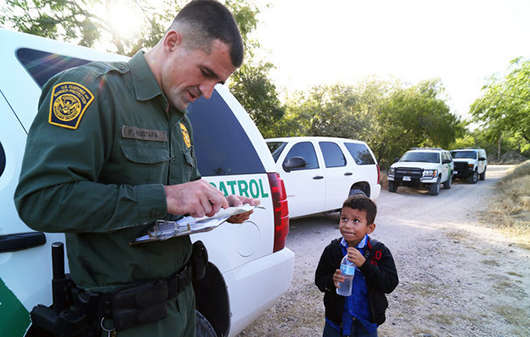
I would think after weeks that this story would have run its course in the news cycle, but apparently not, as we continue to see the headlines, photos and videos of thousands of Central American unaccompanied minors crossing our southern borders seeking asylum. It’s about immigration and children – subjects that typically rouse our passions. Plus, immigration and children in the package we are currently experiencing may put our passions in conflict with one another and that makes for more “story.” One may feel equally passionate about issues of immigration – legal or illegal — and caring for the well being, both short and long term, of children regardless of their ethnic or cultural origins. So – what do we do? Or, maybe more to the point – What did we do?
I know this is difficult – being honest about our own culpability always is – but let’s first of all acknowledge and be accountable for our responsibility in the current situation. Since Columbus first stepped foot on the American mainland near today’s Trujillo, Honduras, in August 1502 during his fourth voyage, the native peoples and their lands have been exploited by Anglos/Americans. Read the history from the establishment of the “banana republics” in the 19th century with their sprawling banana plantations to the U.S. led destabilization of Central America which began in 1954 with the overthrow of the elected Guatemalan President Jacobo Arbenz whose plans ran contrary to the interests of the United Fruit Company, a U.S. corporation owning much of Guatemala’s fertile land, along with railroad infrastructure, and a port. Let’s not forget the U.S involvement, both covertly and overtly in the Central American civil wars, gorilla wars, and military coups of the 1950-1980’s. Are we not surprised that with decades – even centuries — of exploitation, government instability, chaos, and lawlessness all exacerbated by extreme poverty within the population that corruption, gangs, drug use, and violence increased exponentially. And now we have thousands of children seeking to escape the violence and poverty streaming across our southern borders. Yep, no doubt, our national policies and actions through both Democratic and Republican administrations during the last two hundred years have contributed to the current humanitarian crisis on our borders. As a people and a nation we must acknowledge our culpability and complicity in this human tragedy. Can we not take this first step toward a solution? Let’s stop blaming everyone and everything else. Let’s stop maligning children and parents seeking safety, sanctuary, and hope in what we claim to be the greatest nation on earth. Let’s be the greatest nation and seek a solution that is just and compassionate and offers life and hope for all.
NOTE: I realize I have jumped into the fray with this post. As I stated in the previous post, for me the landmarks of our spiritual journey and subsequent growth are those times we take an honest look at ourselves and take responsibility for our actions, hold ourselves accountable for them, and move forward with new vision, hope, and resolve. Perhaps this is one of those landmark occasions when our nation needs to do just that!
 Pilgrim Seeker Heretic