Category Archives: Culture

We don’t matter so much, but the children do.
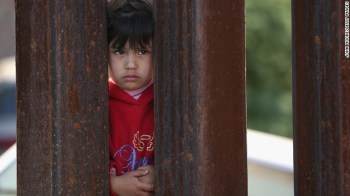
Teach the children. We don’t matter so much, but the children do.
— Mary Oliver
This was my morning read. My heart aches as the truth of Oliver’s words is juxtaposed with the recent actions of our Texas Senate. In passing SB 1018 our elected senators are in so many ways saying that children do not matter. SB 1018 will allow the warehousing of immigrant families and children in family detention centers licensed as child care facilities. Not only would these centers be licensed, but they also would be allowed to waive certain minimum standards established for day care centers. Why would we allow ANY facility to “care” for children in a place or manner that does not meet a minimum standard of care? Our Senators seem to be sending the definite message, “You do not matter, and we don’t care!”
Another aspect that makes SB 1018 even more abhorrent, if that is possible, is the fact that the bill was written by the GEO Group, a for-profit corporation that operates these types of detention centers often referred to as “baby jails.” https://www.texasobserver.org/texas-senate-votes-license-baby-jails-child-care-facilities/
The bottom line is that our elected Texas senators have approved the for-profit incarceration of families and children in “licensed” facilities that do not have to meet minimum standards of care. We do have better options available to us! What are we teaching our children, all our children? Surely not that their lives matter! I am appalled and ashamed of our senators’ actions. Our own District 1 Senator Bryan Hughes authored this unconscionable bill. As I said, my heart aches for us all, especially our children.

The BGCT – Welcoming and Affirming
 As the dialogue and apparent divisions within the Baptist General Convention of Texas and local congregations over the issue of a welcoming and affirming stance toward their LGBTQ members continue, I encourage us all to stop and ask ourselves, individually and congregationally, this question: Who are we welcoming and what do we really want to be the focus of our affirmation? The “who,” I believe is relatively simple. We want to welcome ALL peoples into the love of Christ and the fellowship of His Body, the Church. Answering the question, “What do we want to be the focus of our affirmations?” may be a bit more complicated. Or, maybe not!
I sometimes wonder if we, christian folks and congregations, have not allowed ourselves to be overly focused on the sexual orientation and same-sex marriage issues. Do we really want to spend our time and energies squabbling over these issues and in the process threatening our unity in and ministry for Christ? Enough is enough already! Let’s truly practice our belief in the priesthood of the believer and respect the spiritual discernment of our brothers and sisters in Christ and our congregations in these particular matters. If we continue contentious dialogue or debate, insist on being right or winning the other side over to our “right” way of thinking, or denying fellowship, we are all wrong, and we all lose with the greatest loss being the cause of Christ. We can respectfully state our beliefs and our respect for the others discernment process, acknowledge our disagreement, and agree to disagree. When we do this, we can then turn our energies and cooperative efforts toward focusing on far more meaningful areas of affirmation.
What might be the affirmations of a welcoming and affirming congregation? Here are a few suggestions for starters:
— Let’s affirm God’s sovereignty over all our lives.
–Let’s affirm our love of God and our love for our neighbors.
–Let’s affirm the sacredness of every person – every human life. Let’s live out that affirmation by treating everyone with respect, seeking to listen to and understand their stories and struggles, and participating in their lives in ways that engender human flourishing, spiritual growth, and opportunities to reach one’s God-given potential.
–Let’s affirm the sacramental nature of all relationships for every relationship has the potential to be a portal of God’s grace in and to our lives.
–Let’s affirm and encourage fidelity and commitment in marital, covenantal relationships.
–Let’s affirm the value of our children and our families by offering support, encouragement, and guidance to parents as they nurture and guide their children.
–Let’s affirm our desire to follow Christ and be His Body and Presence in and to the world.
I believe the BGCT and local congregations can be both welcoming and affirming. I believe this as I recall the first scripture verse I ever committed to memory: “I can do all things through Christ who strengthens me.” — Philippians 4:13
Can’t we?

Late to the Party! A More Perfect Union
 I am a little late to the party with this commentary! I have been caught up in my own ruminating, reflection, and recovery from the last eighteen months of our horrific, unprecedented presidential campaign and election trying to get my perspective and stability refocused and centered. I am not completely there yet, but moving forward. Upfront! I voted for Hillary. Both candidates were/are flawed as all human beings are with some being more so than others. Given Hillary’s upbringing in middle-class America, her decades of national and global public service in both domestic and foreign affairs, her heart for and demonstrated efforts on behalf of all families and children, I truly believe she was, and still is, the most experienced and best qualified person to serve as President of the United States. That being said, Donald Trump is our President-Elect. And, in all honesty, I believe it is a travesty that in our “alleged” democratic nation someone who did not win the popular vote will be elevated to the highest office in the land. Barring defections during the Electoral College vote, that is what will happen on December 19. There are rumblings of such a defection; however, we all know that is unlikely. Yet, given the history of this election – never say never! In the meantime, let us resolve and hear Mr. Trump’s pledge “to be President for all Americans” and remember Hillary’s gracious words and move forward giving Mr. Trump “an open mind and a chance to lead.” I intend to do just that even as I continue to speak out for the values I hold dear, the values our nation was founded upon — justice for all, domestic peace, our common defense, our common good, the blessings of liberty for all, and a more perfect union.
A more perfect union! Of all the flaws, both individual and as a nation, illuminated by this campaign and election none are more glaring than the deep divides among our people. We (and the media and pollsters) have sliced and diced ourselves into such varied social, racial, cultural, economic, religious, etc. groups that one might ask, “Where are the Americans?” That’s a good question, but an even better question might be “Who are the diverse American people?” If we are to find that “more perfect union,” we must reach out and seek to know one another. We are allowing our “tribalism” and suspicions of the “others” to destroy us – our families, our communities, our nation, and ultimately, ourselves – our souls. We rally around candidates and causes. We protest policy and positions. Yet, we fail when it comes to reaching beyond our tribal groups to embrace, know, understand, and respect those of other groups. When will we learn that foremost we are all of one “tribe,” and at our most basic level need and want the same things – respect, love and acceptance, peace, safety, liberty, happiness, and opportunities for prosperity.
What are we called to do to seek and nurture that more perfect union? Though admittedly an idealist, I am not naïve enough to believe that a “perfect” union is possible, and if so, it might be a bit boring, but I do believe we can do better. We must do better if we hope to avert greater division and civil disturbances among our people. Maybe we could reach out to one other person outside of our routine tribe and seek to know them better, listen, try to understand and walk in their shoes, build a relationship. Maybe we could begin to speak up when we see or hear someone being ridiculed or demeaned. Let them know that they are worthy of respect. Let the offender know that his/her actions are not acceptable. Or, maybe we could open our homes and host some “get to know you” gatherings. I am sure there are many things that we could do to foster unity among us all. The question I must ask and answer is, “What will I do?” And you, “What will you do?” Let’s do something so we can all enjoy that “more perfect union” and enjoy the party!

Henri Nouwen and a Response to the Orlando Attack

Henri J.M. Nouwen
Last Saturday, June 11, my morning coffee companion was Henri J.M. Nouwen and Reaching Out: The Three Movements of the Spiritual Life written and published in 1975. Much of his basic premise is that “the spiritual life is that constant movement between the poles of loneliness and solitude, hostility and hospitality, illusion and prayer. That morning I was contemplating Nouwen’s words reflecting solitude not as a state of loneliness, but as a condition of our heart and soul that makes “it possible to convert slowly our fearful reactions into a loving response.” How was I to know that the very next morning, June 12, the nation and I would be horrified by the Orlando attack on the LGBT community?
I am a christian, a follower of Christ. I am also a lesbian. For most of my life I kept my same-sex orientation a secret and did everything I knew to do to not have the attractions and not be gay. It was a secret that took me to the depths of depression, the doors of insanity, and the brink of suicide. In my journeys into contemplation and spiritual solitude I have moved toward acceptance and reconciliation—acceptance of myself as a lesbian christian woman and reconciliation between that fact and my basic spiritual beliefs. I certainly identified with Nouwen’s counsel that in our solitude the events of the world around us “as well as the many personal disappointments and pains, no longer can be seen as unavoidable concomitants of our life, but all become urgent invitations to a response; that is a personal engagement.”
Faced with the burdens of our reality, the few “extremists” or “fanatics” become “indispensable reminders that no lasting healing will ever take place without a solidarity of heart.” These few “force us to ask ourselves how many games we play with ourselves and how many walls we keep creating to prevent ourselves from knowing and feeling the burden of human solidarity.” Nouwen proclaims that we fluctuate “between the humble confession that the newspaper holds more than our souls can bear and the realization that it is only through facing up to the reality of our world that we can grow into our own responsibility.”
Do we and how do we protest the realities of our world out of solitude? Hopefully we do as “life can teach us that although the events of the day are out of our hands, they should never be out of our hearts, that instead of becoming bitter our lives can yield to the wisdom that only from the heart a creative response can come forth.” Nouwen reminds us that, “When our protest against war, segregation, social injustice, (the Orlando attack against the LGBT community,) do not reach beyond the level of a reaction, then our indignation becomes self-righteous, our hope for a better world degenerates into a desire for quick results, and our generosity is soon exhausted by disappointments. Only when our mind has descended into our heart can we expect a lasting response to well up from our innermost self.”
Can we, in the solitude of our hearts truly listen to the pains of the world—most especially now the pains of our LGBT community? Nouwen asserts that we can for in the solitude of the heart “we can recognize them not as strange and unfamiliar pains, but as pains that are indeed our own. There we can see that what is most universal is most personal and that indeed nothing human is strange to us.” When we stand in solidarity with our fellow humans, our LGBT brothers and sisters, in their suffering and pain, then “our first attempts to alleviate these pains can come forth.” Feeling another’s pain leads us to compassion, which “brings healing and new strength. The paradox indeed is that the beginning of healing is in the solidarity with the pain.” Nouwen recalls our history “when men and women have been able to respond to the events of their world as an occasion to change their hearts, an inexhaustible source of generosity and new life has been opened, offering hope far beyond the limits of human prediction.” My thoughts go to the work and movement of Ghandi in India, Mandela in South Africa, and King in America.
Nouwen reminds us that spiritual “movement from loneliness to solitude, therefore, is not a movement of a growing withdrawal from, but rather a movement toward, a deeper engagement in the burning issues of our time.” Our acceptance, affirmation, and welcoming of our LGBT persons has been an issue in our nation for decades. Does not the senseless, violent attack targeting the LGBT community known to frequent Pulse, prominently known as a gay club, elevate the issue to that of “burning issue?” Must we not respond and engage this issue from the solitude of our hearts!
And then Sunday morning, June 12, 2016, happened! With my shock and horror of the attack, with my heart both numb and yet heavy with sorrow and compassion, and with Nouwen’s word fresh in my heart, I was moved to engage, to seek a creative response — to bring our local LGBT community as well as our community at large together in a gathering to remember and honor the Orlando victims, and to stand in solidarity in our pain and sorrow as well as in our hope and resolve for positive change and a brighter future. Over 200 people gathered at a local park on Thursday evening, June 16, and we did just that. My words to that gathering and to everyone, everywhere:
On behalf of East Texas PFLAG and our other sponsors – Tyler Together, Pineywoods Voice, Tyler Area Gays, Tyler Transgender Support Group, East Texas Islamic Society, and Life Covenant Church – I want to say welcome and thank you for your attendance and participation this evening. We are gathered here as a community to stand in solidarity with Orlando and the families and friends of the victims in the horrific attack on the LGBT community there last Sunday. Earlier this week, our president called for our nation’s flag to be flown at half-mast in memory and honor of the victims in Orlando. Tomorrow our nation’s flag will return to full mast “normal,“ if you will. But life will never be the same for friends and families of the Orlando victims, nor for the LGBT community, most especially for those whose lives were murderously taken last Sunday morning. They have no life to live. We want to take this time to remember and honor those killed and reflect on 49 lives, 49 sacred souls with names and faces that were snuffed out by an act of senseless violence fueled by hate and terrorism. As we seek to come to grips with, and process the shock and horror of the attack, we grieve and we support one another. For those of you who may not be an integral “part” of the LGBT community, we want you to know that your presence and your shared grief and support is important, desperately needed, and much appreciated.
Now, we will remember and honor the victims, their families and friends as we join one another in the bonds of our common humanity – our sorrow in loss and our hopes for positive change and a brighter future. John David Creamer, pastor of Life Covenant Church, will lead us in prayer.
(As each name and brief bio of the 49 victims was read a volunteer from the crowd walked to the front carrying their picture. A bell was rung.)
 Volunteers hold photos of the 49 people killed Sunday in the Orlando nightclub shooting during a Thursday memorial service at Bergfeld Park in Tyler. A single bell tolled and the line of volunteers grew as each name was read, followed by a brief biography in the person and their age. Andrew D. Brosig/Tyler Morning Telegraph
 Esther Gonzalez, right, buries her face in her hands and weeps while viewing photos of the 49 people killed in the Orlando nightclub shooting during a vigil Thursday at Bergfeld Park in Tyler. Hosted by a variety of organizations from across the community scores came to the park to remember and grieve. Andrew D. Brosig/Tyler Morning Telegraph
 Volunteers hold photos of the 49 people killed Sunday in the Orlando nightclub shooting during a Thursday memorial service at Bergfeld Park in Tyler. A single bell tolled and the line of volunteers grew as each name was read, followed by a brief biography in the person and their age. Andrew D. Brosig/Tyler Morning Telegraph
 Diverse members from around the community and around the area view photos of the 49 people killed in the Orlando nightclub shooting following a memorial vigil Thursday at Bergfeld Park in Tyler. The names of the deceased and a brief biography of each was read during the emotional service. Andrew D. Brosig/Tyler Morning Telegraph
 Brenda McWilliams, a founding member of East Texas PFLAG, is flanked by volunteers holding photos of people killed in the Orlando nightclub shooting as she thanks the crowd for attending a memorial vigil Thursday at Bergfeld Park in Tyler. Andrew D. Brosig/Tyler Morning Telegraph
As we prepare to leave this place may we carry these sacred lives with us. May the light of their lives continue to shine in us and through us and may their light guide us and give us courage. Courage to act in ways that champion acceptance, not accusation; courage to seek out and participate in conversations and community, not condemnation; courage to speak and act in ways that foster love and compassion, not hate and violence. Courage to know, not just in our heads, but also in our hearts, that every human life is sacred and to live respectfully of one another and our beautiful, God-given diversities. In doing these things, then, and only then, will we truly remember and honor these 49 beautiful, sacred lives.
Join me in 49 seconds of silence as we remember these, reflect, and resolve to act and live in ways to honor these 49 and ultimately ourselves and our community.
(Silence).
Thank you.
Anwar Khalifa with the East Texas Islamic Society will close our gathering.
It was an outpouring of community solidarity, grief, compassion, and love. In his closing, Anwar asked all the clergy present to come to the front and join him for the closing prayer. A very moving and much needed gathering together. It is my hope and prayer that as a local community, a nation, and a world we will seek the solitude of our hearts and that our hearts will change in ways that nurture our compassion and desire to live in solidarity with all humankind.

The Sacred: Part II-Reflections and Ponderings

“Brenda, if you learn and know nothing else, know this: the sanctity of life, the sacrament of relationship, and the sacredness of death.”
In reflection, it seems ironic that the night I heard these words ended my CPE training. I continued to have difficulty with the retina, needed additional surgical procedures, and was not able to return. However, I continued, and to this day continue, to revisit and ponder upon the events of that night and the words I had heard. Given the manner in which I had received them they were much more than mere words. It felt as if they were more like an edict, a proclamation, a lens through which to view all of life.
“Brenda, if you learn and know nothing else, know this: the sanctity of life. . .”
I know that sanctity is the quality or state of being holy or sacred; thus life itself is considered holy and sacred; inviolable — to important to be ignored or treated with disrespect. The origin of “sanctity” is the Latin word “sanctus” meaning sacred.
I believe the “sanctity of life” message that I heard was a foundational theological and spiritual truth based on the sacredness of life — all lives. It was not the “sanctity of life” political message that was being touted then, and we hear often today in the Pro-Life/Pro-Choice debate. Again, it was a universal truth based on the sacredness of life — all lives. We hear today the expressions — Black Lives Matter, LGBT Lives Matter, Cops Lives Matter — and they do because ALL LIVES MATTER. Oh, that we might embrace ALL LIVES MATTER and SANCTITY OF LIFE as spiritual truths and live them out in our daily lives and not simply use them as catchy slogans to promote our political, racial, or cultural biases.
Christianity’s foundation for sanctity of life is grounded in the doctrine that God is the Creator and God chose to create man in His image. Man is God’s image bearer. It is also quite relevant and important to notice that this valuing, worthiness, sacredness of life is universal to the traditions of all major world religions and perhaps represents their deepest teachings, roots and values. Sadly, we, all of us, are not living up to our traditions.
“Brenda, if you learn and know nothing else, know this. . .the sacrament of relationships. . .“
What does that mean? Being brought up in the Baptist faith tradition, I was more familiar with the term ‘ordinances’ than “sacrament” so I had to do some study. I knew of Baptism and the Lord’s Supper as “sacraments” in the Protestant faith traditions. I quickly learned there are seven sacraments in the Catholic faith tradition. But,what exactly is a sacrament? What is the meaning and purpose of a sacrament or sacramental rite.
Well, I read a lot about sacraments, their meaning and purpose. Most of which I understood, some I did not as I am not a theological scholar. I was able to grasp that sacrament is derived from the Latin word sacramentum and means “a sign of the sacred.” A sacrament is also a portal of grace in and to our lives. Sacraments not only come from God, but they also make God present in our lives. Saint Thomas Aquinas wrote, “Sacraments are visible signs of invisible things whereby man is made holy.”
So, in my ponderings, I have come to understand sacrament to be an outward expression of the sacred/the holy, that which points us toward God, and/or that which invites God’s participation in our life. I had learned long ago that in a sacramental marriage God’s love is manifest in the loving, grace filled, covenant relationship between the couple. God and His love are mirrored in that relationship. Thus, the sacrament of marriage is intended to be an outward sigh of God’s love and grace, the sacred and holy. Now, that is in theory, at least. We know from experience that that is not nearly always the case.
As I continued to ponder on “sacrament of relationship” I began to ask myself could it not be possible for us to manifest/mirror the love of God in all our relationships from the loving, covenant relationship between life long partners, to the kind, helpful, affirming relationship between intimate friends and family, to the courteous, respectful relationships with our co-workers, to the respectful acceptance of differences with those we call our enemies. If we accept the premise of the sanctity/sacredness of human life — all human life — then it is not a huge jump to conclude that if I am sacred, and you are sacred, then how we relate and treat one another should be “an outward expression of the sacred” — a sacrament, if you will. Can our relationships not be a “portal of grace” to one another? The sacred in me recognizes, respects, and responds to the sacred in you in a sacred fashion. Can not the sacred and grace be expressed in how we relate to one another? Thus, the Sacrament of Relationships–all relationship.
“Brenda, if you know nothing else, know this. . .the sacredness of death.”
What is sacred and holy about death? For so long in our cultural history we have not talked about death and dying and what it means for us individually and as a people. Thankfully, we are beginning to move toward conversations regarding death, even our own deaths. As Michael Dodd, a religious naturalist, says, “Death is sacred, necessary, and real.”
As I studied the word “sacred,” the definition “worthy of or regarded with religious honor and respect” caught my attention. Certainly through my experiences that evening in the hospital, I began to view death with a worthy regard and sense of honor – sacredness. I suppose that, in the first place, if we view the individual life as sacred then the death of that life is no less sacred. Death is a necessary and inevitable part of the cycle of life. As surely as we have birth and life, we must have death. In our natural world, death is life-giving.
Just a little aside here: I have an affinity for dead trees, and my partner gives me grief about that at times, especially when I am taking photos of them. I see a dead tree still standing tall or fallen, and I am in awe at the growth and change that has occurred from tiny seed to towering trunk. I envision the life that the tree has exuded and nurtured from the insects it has fed, to the nests and young is has held, to the seeds and seedlings it has propagated. Even in its dying it will decay and continue to provide sustenance and return rich, life-giving nutrients to its mother earth. For me, that is a sacred process.
Then even more so would not the death of a person, any human being regardless of race, creed, or culture, be a sacred thing. Consider with wonder the growth and change the person has experienced in his/her lifetime. Note with awe, perhaps most strikingly, at the deathbed, the lives, the family, the relationships the person influenced and nurtured. Yes, and even as much as we don’t like to think about it, and however we frame it –“dust to dust, “ashes to ashes,” “coming from God and returning to God,” that person’s remains will in some fashion return to the earth and become life-giving. Death – a sacred/holy thing in the cycle of life.
Now, in my opinion, what makes us as humans different from the tree is our attribute of soul or spirit. What I have come to believe regarding the human soul/spirit — and I believe it is undeniable and universal — is that it is “eternal.” In our christian faith tradition the soul/spirit of the deceased has eternal life with God. And, perhaps an additional way of viewing eternal life is that the soul/spirit of the deceased is carried and lives on within us — in our hearts and souls and in our minds and memories. And that is a sacred/holy thing—coming from and perhaps an extension of our sacramental relationships.
“Brenda, if you learn and know nothing else, know this – the sanctity of life, the sacrament of relationship, and the sacredness of death.”
Those words have become transformative in my life – my beliefs, my thinking and my sense and expression of my spirituality. I had begun to move and grow from a more rigid, perhaps fundamental, spiritual worldview a couple of years prior to this experience. You might say this night and these words somewhat “sealed the deal.” I am, and always will be, a christian (with a small “c”), a Jesus-follower, and a member of the church catholic – again small “c.” However, much of the dogma and doctrine of faith traditions no longer fit into my new found paradigm of what is truly sacred and holy.
What I heard that night was a universal spiritual truth of the sacredness of life, relationships, and death common to all peoples, cultures, and faith traditions. In all our differences, we as the human race hold, at the very least, these three things in common. We all have life. We are living, breathing, and capable of thought, emotion, and action.
We all have relationships. We are born into relationship. You and I are someone’s son or daughter, perhaps mother or father, or brother or sister. So is our neighbor that aggravates us at times, our Muslim co-worker, the immigrant, perhaps undocumented, that does our yard work, the adorable grocery clerk, the annoying taxicab driver, the soldier we would call our enemy. All people are in relationships, and someone loves them and they love others. Think about it.
We will all die, at some point, and that death will be sacred as it marks the passing of a sacred life, a shift in sacramental relationship, a return to that from which we came. In death we all participate in that natural circle of life. In death, a life is mourned by others, and others will continue to carry the soul/spirit of the deceased within themselves.
We can’t escape it. The sanctity of life, the sacrament of relationships, and the sacredness of death are elements that unite us with one another. It is my hope and prayer that we can come to realize this at both the head and the heart level, come to truly see others as “sacred” beings, and seek a respectful, peaceful unity in sacramental relationships with all peoples.

Incredible – or Not? Maybe I’m Just Getting Old and Grumpy?
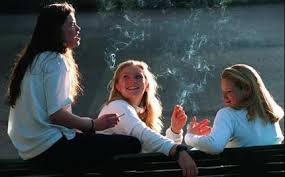 I had an experience yesterday, and I am still not quite sure how to describe it. I know that in the midst of it my feelings ranged from disbelief, disgust, and aggravation to sorrow, plain and simple. In passing our large front window, I noticed a little convertible sports car parked at the curb in front of the house. There were three young people, probably late teens or early twenty’s, sitting in the car and one standing in the street leaning into the car. We live in a quiet neighborhood not prone to sports cars, so my initial thought, “What are they doing?” At that point I watched, incredulously, as the young woman sitting in the back seat, curbside, dropped what appeared to be a cigarette butt in the street between the car and the curb. Not what I want to pick up when I blow and sweep our street curb and gutter!
I normally don’t make a beg deal or create a scene with the small stuff, yet somewhere inside me this felt huge. I experienced it as mindless carelessness with a cigarette butt, and we know where that can lead in this dry summer heat. I also saw thoughtless littering and disrespect for property. What I did next surprised me! I stepped out onto the front porch and asked, “Did I see you just throw a cigarette butt on the curb?” At that, a young man, sitting in the back with the aforementioned young woman responded, “No,” while waving his hand with his cigarette still between his fingers. I replied, “I’m referring to the young lady,” and nodded toward his companion. She did not respond—not even a turn to look at me, but she apparently fessed up to her companions.
The young woman, standing in the street and leaning into the car, came around the back of the car, looked at the ground, and picked up the cigarette butt. What she did next was equally incredulous as the first young woman’s actions and fueled my disgust and aggravation. She walked back around the rear of the car, and as she did, she threw the cigarette butt to the middle of the street. Did the sports car not have an ashtray?

OLYMPUS DIGITAL CAMERA
I came back in the house ranting to myself a bit and threatening to take their picture and put it on Facebook! I quickly decided against that and thought the wiser move was to simply go pick up the cigarette butt. I grabbed a paper towel, went to the street, stepped on the butt (to make sure it was out), and picked it up with the towel. Only the young man, who was now out of the car acknowledged my presence with a mumbled, “Thank you,” which came only after I had made the general comment, “It’s just about respect for property. You all have a good day.” I did not linger to give a lecture. I came right back into the house. In a very few minutes they said their “goodbyes” with hugs all around. The two girls left in the sports car, and the guys were gone.
All the other feelings aside, I just felt sad. Sad for these four young adults who seemed, at least in this instance, to have no sense of the right thing to do, personal responsibility, or respect for property, and perhaps, for other persons. After all, they were in front of my house, littering my space, space that I take responsibility for and keep clean, and I was not terribly confrontational and certainly not belligerent or combative with them. What I saw from them was insolence and defiance. If they behave this way in the small things, I wonder how they deal with the larger issues. As a retired school counselor whose primary message to youngsters was and is to respect yourself, respect others, and respect property, I am saddened. I hope that as they mature they will encounter people and experiences that will strengthen their character and teach them the value of respect and good choices.
 Pilgrim Seeker Heretic