Category Archives: Culture

Amid a Perfect Storm

On January 20th, we will observe two significant national events-Trump’s inauguration and Martin Luther King, Jr. Day. I don’t know that I could ever imagine a greater dichotomy than that represented by by these two men. . .

When Experiencing A Mental Health Crisis
The shiny, new fan spun silently overhead while the rusty, old box fan roared at my back. helping to moderate the rising Texas summer heat and oppressive humidity. From the porch I watched the muddy waters of the bayou slowly nudge their way downstream, a testament to both the recent rains and the long-term drought conditions. The family river house was again my place of respite, reflection, and renewal. I wrote:
My mental health professional speaks in terms of a “reset” or “reboot.” In other words, “Let’s turn it off and in a bit, turn it back on and see what happens.”

Winter Solstice, Religious Festivals and Being the Light

I was awakened at 4 a.m. Christmas morning, not by “visions of sugar plums” but by the words of Dana Shapiro.
“Moments that announce themselves as your subject are rare and there’s magic to them. Ignore them at your own peril,” she wrote in her 2020 book Still Writing.

Love Your God; Love Your Neighbors

My thoughts have been pinging on the phrase “your God.” More specifically, Matthew 22:37-39 has been on my mind: “Love the Lord your God with all your heart and with all your soul and with all your mind. … Love your neighbor as yourself.” Jesus proclaimed these…

Do Merton’s Observations on American Myth and Frontiers Apply Today?
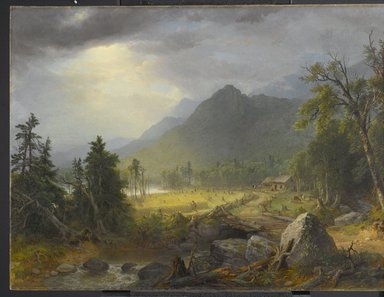
Thomas Merton proposed in his 1965 book Conjectures of a Guilty Bystander that a widely accepted U.S. myth was that “America is the earthly paradise.”
“When a myth becomes a daydream, it is judged, found wanting, and must be discarded. To cling to it when it has lost its creative function is to condemn oneself to mental illness,” Merton wrote.
Read the Full Article at Good Faith Media.

What About “What About Easter?”
I wrote “What about Easter?” several months ago posting it to a local media blog The Tyler Loop Babble before posting it here. Not long after it went live on the site, probably within minutes if not seconds, I had this mind-rattling thought, Oh, my, what have I done! The thought was disturbing enough, but the accompanying feelings were downright unsettling.
The feelings of vulnerability and exposure surprised me. Those feelings had little if anything to do with the content of the piece, and a whole lot to do with the fact that I said it out loud – well, I wrote it down. I threw my questions, thoughts, and belief journey out into the ether world for all to peruse, analyze, criticize, and judge. Now, I suppose that’s not a really big deal since anyone – aka yours truly – writing editorial and/or opinion content knows that it’s the nature of the beast and comes to expect analysis, criticism, and possible judgment. Thus, the need for a “tough skin,” a steadfast stance on said opinion, and/or solid supporting empirical evidence where applicable and available.
So, what was the vulnerability and exposure about? Hum! Reflecting on that question, the best answer I came up with regarded cultural context. I/We live, work, and play in the East Texas Bible Belt where the faith tenets of traditional and evangelical Christianity abound. Texas as a whole ranking #11 in the 2022 Most Religious States with 64% of adults reporting as religious.
I doubt that my thoughts expressed in “What about Easter?” reflect those of most East Texas religious folks. Or I wonder? Does our fear of vulnerability and exposure when going against the grain of perceived or real public opinion thwart the expression of our genuine thoughts and feelings? Maybe there are more folks with questioning, outside-the-box thoughts and beliefs, but keep them to themselves. Does that fear shroud our genuine selves? If that fear did not exist, how many of us would risk stepping out and going against the grain for the sake of freedom of expression and an authentic life.
I found it interesting that not long after my bout of vulnerability and exposure, a group of friends posed the question, how do we help folks with different, against-the-grain, outside-the-box thoughts and feelings on any issue be able to step up and speak out? I don’t know. However, I do have an opinion on that: As more of us step up, risk the vulnerability and exposure, and respectfully express our against-the-grain thoughts and feelings, others will as well. There is encouragement, motivation, and power in knowing one is not alone.
Post navigation

What About Easter?
NOTE: I wrote What About Easter? during Easter week some three months ago, but did not post it here. I did post it on a local blog, The Tyler Loop Babble. Why did I not post it here on my personal blog? What About ‘What About Easter?’ coming soon!
It’s Palm Sunday and much of the world is gearing up for Holy Week and various remembrances – Maundy Thursday, Good Friday, Black Saturday, and the celebratory Easter Sunday morning.
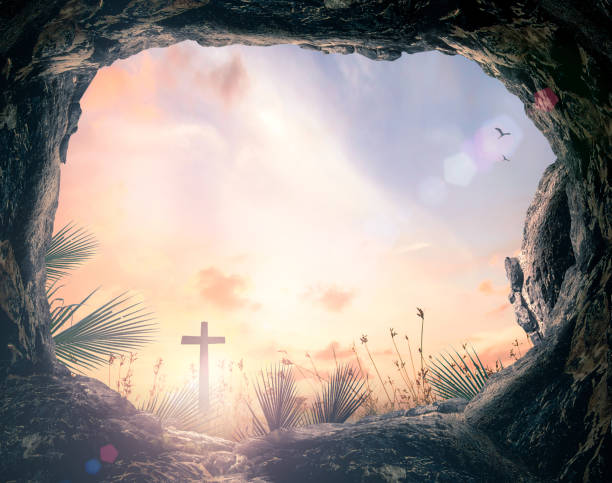
For those like me, and there are many, who have experienced or are in the midst of a spiritual shift away from the D’s & D’s – the dos and don’ts, the dogma and doctrine – of evangelical or traditional Christianity for that matter, Easter is a conundrum. What do we do with Easter? After decades of hearing, sincerely believing, and even teaching the Jesus story, we question, we doubt, we just can’t buy into the whole story 100% anymore. It’s like a suit of clothes that no longer fits, or maybe, new wine, bulging, ripping at the seams of old wineskins. Still the question – What about Easter?
I start with Jesus. I believe, at the very least, Jesus was a man of God called to preach, teach, and live a life exemplifying justice, mercy, and humility. According to Micah 6:8, that is just what the Lord requires of man. Jesus called out the unjust and oppressive practices of the tax collectors, money changers, and civic powers. He lambasted the legalism and ritualistic show and sham of the church hierarchy. He demonstrated care, compassion, dignity, and respect for lepers, children, the ill and infirm, beggars, prostitutes, and all sorts of marginalized folks. He lived humbly as an itinerant preacher with no property of his own and dependent upon the generosity of others for sustenance and shelter.
Jesus consistently and passionately bucked the status quo riling both civic and religious leaders. Feeling a threat to their authority and fearful of a populous revolt given Jesus’s growing influence with the people, they arrested him under trumped up charges, carried out a sham trial, convicted, and crucified him. They killed the man – a good man, a godly man, quite possibly the anointed son of God. Jesus was crucified because of pride, greed, and fear – the sins of the people of that day and particularly those in authority. Has our manner of sin really changed much over the centuries? They had power, position, wealth, exclusivity, and they wanted to keep it that way. Fearful of losing it all, they killed Jesus, period. Not going to wade into the theological weeds of sacrificial atonement here. That’s good Friday, on to Easter morning!
What happened that long-ago Sunday morning may be the prime example of God’s working in mysterious ways. Not to be flippant, but truly only God knows. I know I don’t know! I believe that’s a good thing, maybe one of a multitude of things that keep me mindful and in awe of the mystery of the Divine and tethered to him/her/it through faith. After all, if one is so certain one knows, there is no need for faith.
Whether one chooses to believe in Jesus’s physical resurrection or not is up to each individual. No need to get caught on the theological sticky wicket of resurrection. These days my takeaway from Easter morning is a renewed spirit. Regardless of what happened to Jesus’s body or whether his disciples encountered him in the flesh, as a ghost, in visions, or hallucinations after his death, we know what they did. They went from being grieved, dejected, and fearful to being excited, energized, bold, and committed in continuing to spread the message and do the work of justice, mercy, and humility that Jesus had begun. I can buy into the disciples having an emotional and/or spiritual experience resulting in a renewed, resurrected spirit and greater focus and commitment to a cause – been there and done that, maybe you have as well. No doubt, ultimately, the disciples walked away from Easter morning with some form of spiritual renewal.
What about Easter? For my part I will remember the life and work of Jesus, grieve his death and the shameful manner in which it occurred at the hands of sinful men, and celebrate the hope of a renewed spirit. A renewed spirit that will lead and sustain in being and doing all that God, by whatever name, requires – to seek justice, love mercy, and walk humbly. That takes care of the Easter conundrum for me.

An Antidote for Our Ailments — Dig Deep!
I attended a meeting of our Tyler Public Library Board last Wednesday, June 1st, at Liberty Hall. The purpose of the meeting was to conduct a public hearing to discuss and consider a Library Patron Request for Reconsideration of Library Materials. The meeting turned contentious, with hostile comments and threats, verbal and possibly physical as I heard “don’t touch me” several times from an encounter which I did not turn to observe.
Library staff were accused of “handing out pornography to our children” which is blatantly false. The book in question, Blue is the Warmest Color by Jul Maroh, is classified as an adult graphic novel and is shelved on the second floor. All children’s books are shelved on the first floor.
Also, the library does not “hand out” books of any kind. Books are chosen and checked out by individuals exercising freewill and freedom to choose or not to choose — adults, young adults ideally with parental guidance, and children surely, hopefully with parental supervision and limits. I hate that our professional, dedicated library staff are being viciously maligned and caught in the crosshairs of our current cultural and societal chaos that is far more significant and way more insidious than any book – even this one, Blue is the Warmest Color by Jul March
The atmosphere and actions during the meeting were not shining examples of our perceived serene, congenial, and lovely rose and azalea adorned community. I was both appalled and deeply saddened by the display of toxicity and entrenched divisions. Yet, given the current political and social state of our nation, I can’t say that I was surprised. Whether we wish to face it head on or not, Tyler is a microcosm of all that is both ill and good with our nation politically, racially, culturally, and spiritually. Seeking refuge in our bubble of sweet-smelling roses and azaleas while ignoring the growing rot of division and its root causes is a hazardous path destined for debacle.

We are at a pivotal juncture at all levels of our being. Is it not time for us as individuals, a community, and nation to dig deep, take a long, hard look inward – individually and collectively — to discover and address the root causes of our anger, hate, and divisions? Can we the people not call upon our better angels for the courage to dig deep, the boldness of heart to transcend our differences, and the firmness of purpose — “to form a more perfect Union.”
I know, digging deep is hard. I hope we are up for it. I cringe to think of where we might be headed if we are not.

Guns — A Terrible Thing Happened!

.ZAK WELLERMAN/TYLER MORNING TELEGRAPH
Pastor Mark McWilliams (no relation to me) was shot and killed in his home church, Starrville Methodist Church, last Sunday morning. Starrville is a small, rural community approximately 15 miles northeast of Tyler in Smith County, TX.
Upon entering the church and preparing for the morning services, McWilliams, his wife and another church member opened the bathroom door and found a young man hiding and holding the church bank bag. According to authorities, the young man had been the focus of an unsuccessful police pursuit and man hunt the previous night.
According to the arrest affidavit, upon finding the intruder in the bathroom, McWilliams, who was armed, started telling him to leave and pulled out his handgun. The intruder lunged at McWilliams, and a struggle ensued in which the intruder seized the gun and shot McWilliams. He also shot at Mrs. McWilliams and a third man who was approaching the church after hearing the gunshots. She was not hit, but the third man was shot. The intruder fled the scene in a truck belonging to one of the victims. He was caught later in the day by Harrison County deputies and returned to Smith County where he was treated for a minor injury and booked into the county jail on numerous charges including capital murder.
When I first heard about the shooting, I was shocked that something of this nature could happen so close to home and in the sleepy little community of Starrville. I began my teaching career 50 years ago in Winona just up the road from Starrville. Many of my students had lived in Starrville. I was saddened by the pastor’s death and the loss for his family, the church family, and the community. I felt sorrow for the intruder, undoubtedly a troubled young man. Yes, a terrible thing happened!
As I considered the incident more, my thoughts began to dwell on the gun. If there had been no gun at the scene, there is a very good probability that the pastor would still be alive, the third man would not have been shot, and a young man would not be facing a capital murder charge. Granted, it was not a good situation, the young man had committed a crime for which there would be consequences, but the presence of a gun compounded the danger and contributed to a tragedy for all involved.
I can remember a time in the not-too-distant past when carrying a gun was an oddity, an exception to the accepted norm. Carrying a gun to church while worshiping the Prince of Peace was never considered a possibility! Today, our society seems to be enamored with guns – concealed carry, open carry, shooting ranges, and long guns slung over shoulders while walking down the street. Yes, such a tragedy!
I just wonder what might have happened if the pastor had approached this troubled young man as the Prince of Peace, the Christ of turn the other cheek — in peace, with grace, love, and compassionate confrontation. Maybe something we all might want to think about as we keep all involved in this terrible thing in our prayers.

We are Breaking or Broke! Why?
 In my recent reading of My Beloved World, Supreme Court Justice Sonia Sotomayor’s memoir, I halted at this statement:
Was it so hard to see himself in the other man’s shoes? I was fifteen years old when I understood how it is that things break down: people can’t imagine someone else’s point of view.
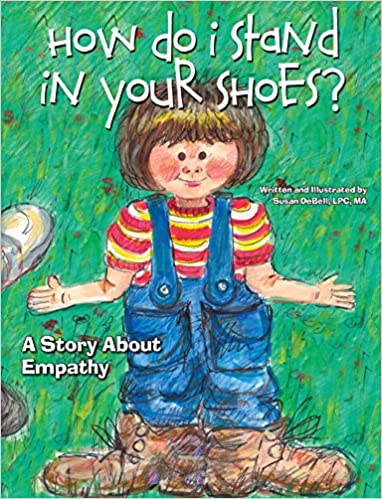 As an elementary school counselor, I read How Do I Stand in Your Shoes to my third-grade students. I introduced the story by presenting the children with an assortment of shoes and allowing them to speculate on who might wear each shoe and what their life might be like. The room always filled with “Oooh’s” and “Wow’s” when I pulled out my uncle’s size 16 house shoes. The lesson was not about shoes, but about empathy and how we can learn to put ourselves in another’s shoes and try to understand and feel how they are feeling in any given circumstance. Sotomayor had her revelation in 1969. I was teaching my third graders in 2001-2010.
It is 2020, and Sotomayor was correct in her understanding of 51 years ago. Our society seems to be breaking down, if not already broke. Why? We don’t seem to be able to, or refuse to, empathize – to imagine someone else’s point of view and understand their feelings as if they were our own. If we can’t empathize with someone, then we can’t feel or even identify with how they might be feeling. The “Golden Rule” – we are to treat others the way we would want to be treated – is often asserted as the guide for our actions toward others. But if we can’t put ourselves in the other person’s situation and feel what he/she might be feeling then how can we be expected to discern how we would want to be treated in that situation and act accordingly.
 Without empathy, we have lost our guide in making just and compassionate choices in our behavior. Without empathy, we become susceptible to indifference, apathy, and lack of concern for others’ well-being. Without empathy, the spark that informs our humanity is snuffed out. Without empathy the bridges needed to traverse the chasms of race, culture, religion, and nationality for the enhancement of our greater good are absent – simply not there. Our sense of community is based on empathy, and without empathy our communities crumble. Our communities are the foundation of our nation.
Even a cursory glance at today’s news headlines – our racial and cultural divisions, our divisive political atmosphere, our petty bickering over issues that should not be argued – illustrate how we, as a society and nation, are breaking or broke. Granted, there is the occasional oasis – oasis whose foundation is empathy – imagining the other person’s point of view and understanding how they are feeling. We have seen teenagers organizing food deliveries for seniors, a 12-year old play his trumpet for weary medical workers, nurses volunteering to serve in Covid hotspots, and moms and grandmothers joining peaceful Black Lives Matters protest.
This gives me hope! Hope that these and others of us showing empathy, modeling empathy for others, and nurturing empathy in others will be the incubators for more empathy among us all and the glue that holds our beloved world — breaking or broke — back together.
 Pilgrim Seeker Heretic