


 I recently started participating in a book study. It is a diverse group of good folks –christian, atheist, agnostic, whatever — each on a journey of personal spiritual growth. Like me, they seem to be pilgrims, seekers, and heretics – awash in questions and doubts, deconstructing former concepts and beliefs, constructing personal truths and unique spiritual paths, — staying the course with authenticity and integrity in our often chaotic intersections with the world we live in, the life inhabiting that world, and the Spirit/God embodied in both the world and its inhabitants.
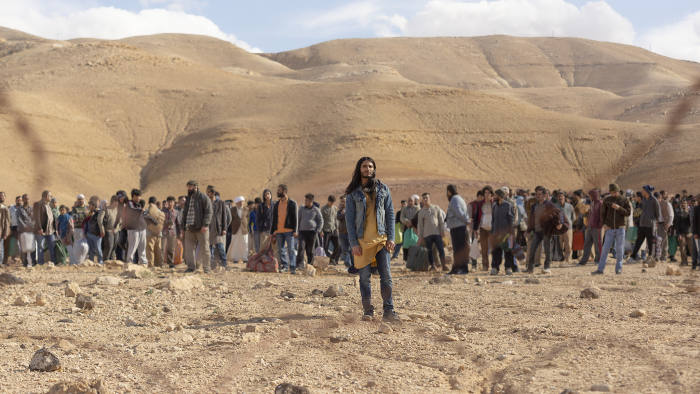
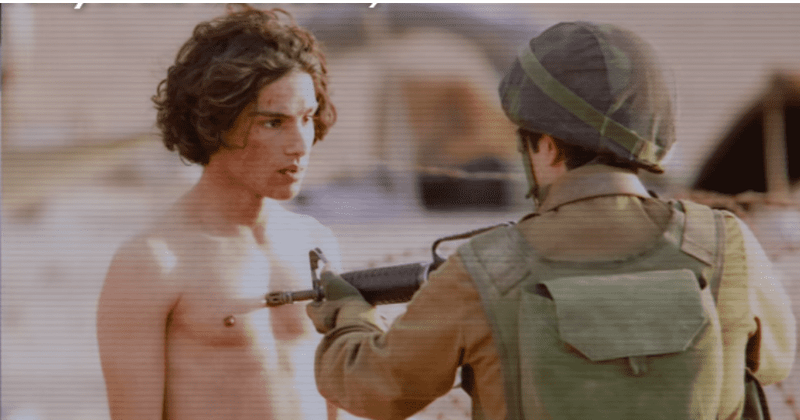 Are we Jabril, the young Al-Masih follower who stays true to his belief in Al-Masih even as Al-Masih has seemingly abandoned them in the desert at the Israeli border? Through injury, thirst, and hunger Jabril is sustained by his belief and the dreamy appearances of his deceased mother who had told him, “God has a different plan for you.” It is Jabril who courageously leads the remnant of followers into Israel, and some critics speculate that
 Are we Pastor Felix Iguera who was disillusioned with church and ministry to the point of dousing his church with gasoline before it was miraculously saved from a tornado? Iguera experiences a roller coaster of despair, confusion, doubt, and hope only to succumb to his own weaknesses and family frailties. Claiming to be a humble servant and wanting only what God wants, he takes the reins and arranges for AL-Masih to appear on his millionaire, televangelist father-in-law’s show claiming “this is what God wants” Al-Masih agrees, but when he walks away from the appearance Iguera is again in confusion and despair.
 Are we Aviram, a hard-nosed, tormented, vengeful, often brutal Israeli agent, who is intent on catching Al-Masih and exposing him as a fraud? Aviram is unwavering in his purpose even as he is shaken by Al-Masih’s knowledge of his past bad acts. He flirts with belief yet remains hard-hearted. Not until he is facing imminent death and tormented by his sin, his “failure to choose goodness,” does Aviram say, “I’m sorry,” as the plane crashes. Are we Aviram — tormented with shame, hardened, and unable to accept God’s love?
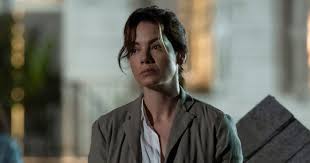 Are we Eva Geller, the CIA agent, sparing with Aviram, and equally determined to debunk Al-Masih and uncover his real intent? Eva has issues. Her identity is in her work. She has a strained relationship with her father, grief and guilt over her late husband, is distraught over not being able to have children, and is sensitive about her mother and her Jewish heritage. In her own words to Aviram, “I am as messed up as you.” She too is shaken by Al-Masih’s knowledge of her past which further solidifies her efforts to find “the truth.” Even as she finds evidence of “the truth” of Al-Masih’s identity and suspects that the U. S. government shot down the plane carrying him back to Israel, she appears to continue to run from the truths of her personal life and emotional distress – she remains a lost soul. Are we Eva?
We are in the midst of Holy Week and I awakened this morning to the breaking news of a deadly attack in Brussels. Two locations bombed, thirty-one individuals killed without provocation, hundreds others injured–physically and/or emotionally, and relationships and families thrown into turmoil and grief with the loss of loved ones. In the wake of increasing global violence and incidents such as this, I am shaken with grief and despair. I am apt to question “why.” Why do we continue to destroy our fellow humankind? What have we lost, forgotten, or failed to learn in our lives’ journeys that we treat one another with such disregard and inhumanity.
Honestly, as I lay in bed last night, I committed to sharing this post today. The news of this morning affirms our need to be reminded of what is holy and sacred. I so want to hope in the midst of despair!
The Sacred: Part I– What I Heard!
In the late 1980’s I marked a verse in my old King James Bible, Matthew 10:27:
What I tell you in darkness that speak ye in light, and what ye hear in the ear, that preach ye upon the housetops.
More recently I discovered and really like The Message translation:
Do not hesitate to go public, now!
I’m going public today and share my story of an experience that changed me, my life, and my spiritual path and journey.
In October of 1997 I was in Clinical Pastoral Education (CPE – chaplaincy) training. I was six weeks into the course, and it was my first rotation being on call– an all-nighter as hospital chaplain on-call. As I sometimes do with first-time experiences, I felt a bit apprehensive, but not overly so, trusting God to lead and guide in all that I might be called upon to say or do. I also knew that as I began the evening, I was a bit more vulnerable –physically, spiritually, and emotionally — than I might ordinarily have been in that I was recovering from surgery for a detached retina. The last couple of weeks had been full of uncertainties. My prayers were for a quiet night.
I began the evening by making a few visits and the “rounds” of the various floors and departments. I then retired to my assigned “sleeping” room. Although, there would be no sleeping that night. Without going into the details of each case, I will simply say that there were four deaths in the hospital that night.
The first was a heart attack victim in the emergency room — a 60 year old man, a family in the midst of shock, confusion, questioning, and grief. I have distinct memories of physically supporting the wife as she stood by the gurney holding her deceased husband’s hand. I did everything I knew to do as chaplain even as I wrestled with this, my first face to face encounter with death.
The second was a middle-aged woman who had been on life support for several days and the decision had been made to remove the life support. I checked in on the family a couple of times, thankfully, the family’s minister was present with them.
The third death that evening was an elderly gentleman in the oncology unit. He was alone as family members did not arrive until after he had expired. The final death was an older gentleman also in the oncology unit. His wife and daughter were present with him. I assisted them with some of the necessary paper work and waited with them until the funeral home came for the remains. When they left, I walked them to their car through the maze of construction that was going on at the time. As I walked back into the hospital through the construction tunnel shrouded in black plastic, it was four o’clock in the morning. I was exhausted — even more drained than when the evening began. I recall my prayer as I walked, “Please, God, no more tonight.”
I got back to my “sleeping” room and leaned against the bed. That’s when it happened. I fell apart–overwhelmed with emotion and exhaustion. I began to cry — deep gut wrenching sobs. The events of the evening were soaking in, and I felt tremendous sorrow for the families. I also felt a sense of wonder and gratitude for the guidance and grace that got me through the night. In the midst of my sobbing I heard God’s voice — not a loud audible voice, yet more than “a still, small voice.” I heard these clear, distinct words in the depths of my heart, mind and soul.
“Brenda, if you learn and know nothing else, know this: the sanctity of Life, the sacrament of Relationship, and the sacredness of Death.”
I was taken aback. Where did that come from? And I continued to weep hearing those words over and over again.
I did lay down for a bit, but sleep was impossible. The events and scenes from the evening were running like a video loop in my head. I could not shake them. In wonder and awe and still somewhat incredulous, I kept hearing and thinking about His words. The message that the most important things in life to know were the sanctity of life, the sacrament of relationship, and the sacredness of death. It was as if when we know and practice these, everything else will take care of itself. I left the room early, completed the log of the night’s events, and exited the hospital shortly after 7 am in wonder and awe, and with lots to ponder.


 Pilgrim Seeker Heretic